D'TRENDS SCIENCE · TECHNOLOGY · LIFE

Life Is More Than a Genome.

Welcome to the extraordinary universe of Omics sciences (组学) — where genes, proteins, cells, molecules, biological systems and artificial intelligence come together to reveal the fascinating complexity of life.

From understanding why diseases happen to discovering better medicines, improving food systems and protecting our planet, Omics is changing how we understand and interact with the living world.

For curious minds · Mavericks · Students · Scientists · Entrepreneurs · Innovators
GENOMICS ✦ PROTEOMICS ✦ TRANSCRIPTOMICS ✦ METABOLOMICS ✦ PRECISION MEDICINE ✦ AI ✦ MULTI-OMICS ✦ THE FUTURE OF LIFE SCIENCES ✦
FIRST, THE BIG IDEA

What exactly is Omics?

Omics refers to a family of scientific disciplines that study the complete sets of biological components within a living organism, cell, tissue or biological environment.

Instead of investigating only one gene, one protein or one chemical at a time, Omics approaches examine large collections of biological information together.

Think of it as moving from studying individual musical notes to understanding an entire orchestra — its instruments, relationships, rhythms and interactions.

The word Omics is commonly associated with the comprehensive study of biological entities, such as the genome (all or substantially all genetic material), proteome (proteins), transcriptome (RNA transcripts) and metabolome (small molecules).

When these different layers are studied together, we enter the exciting world of Multi-Omics.

Biology Big Data Bioinformatics AI Systems Biology Precision Medicine
Scientific visualization representing biological information, molecular structures and bioinformatics
PHOTO LEGEND — Dr. Hwa A. Lim (Father of Bioinformatics), Dr. Charles DeLisi, Professor Charles Cantor, Academician Alexander Bayev, and Professor Joseph E. Lannutti at a press conference, Florida Press Club.
Dr. Lim, who coined the word "bioinformatics" in 1986/1987, was the Chairperson of this very first international conference on bioinformatics.
Dr. Charles DeLisi, one of the early proponents of the Human Genome Project, was Dean of College of Engineering, Boston University.
Professor Charles Cantor was US DoE Human Genome Project Principal Scientist.
Academician Bayev (1904-1994) was Chairman of the USSR Human Genome Project.
Professor Lannutti (1926-1998) was initiator of the Supercomputer Computations Research Institute, host of the conference.
(April 1990, Tallahassee, Florida, USA).
EXPLORE THE SCIENTIFIC UNIVERSE

One Living World. Many Omics.

Explore the different branches of Omics sciences. Each reveals another dimension of life. Select any subject to discover what it studies and why it matters.

Search by scientific name, Chinese name or biological application.
01 / MOLECULAR OMICS

Understanding Life's Molecular Blueprint

🧬

Genomics

基因组学

Studying the complete genetic material of an organism — its DNA, genes, variations and organization.

Explore Genomics

Genomics helps researchers understand inherited characteristics, genetic diseases, evolutionary relationships and potential disease risks. Applications include genome sequencing, cancer research, rare-disease investigation, pathogen surveillance and precision medicine.

🔬

Proteomics

蛋白质组学

Investigating the complete collection of proteins produced by a cell, tissue or organism.

Explore Proteomics

Proteins perform much of the work inside living systems. Proteomics examines protein abundance, structure, modifications and interactions. It supports biomarker discovery, drug-target identification, disease research and the study of biological functions.

📜

Transcriptomics

转录组学

Studying RNA molecules and understanding which genes are active under different conditions.

Explore Transcriptomics

RNA provides an important view of how cells use genetic instructions. RNA sequencing and related methods help identify gene-expression patterns, cell responses, disease mechanisms and differences between healthy and diseased tissues.

⚗️

Metabolomics

代谢组学

Measuring the small molecules involved in metabolism and the biochemical activities of life.

Explore Metabolomics

Metabolites offer clues about what is happening inside cells and tissues. Applications include metabolic disease research, nutritional studies, biomarker discovery, drug-response assessment and understanding how organisms respond to their environments.

02 / CELLULAR & FUNCTIONAL OMICS

Discovering How Biological Components Work Together

🧩

Epigenomics

表观基因组学

Studying chemical and structural modifications that influence how genes are switched on or off without changing the underlying DNA sequence.

Explore Epigenomics

Epigenomic research investigates DNA methylation, histone modifications and chromatin organization. It helps explain how development, ageing, environmental exposures and disease can influence gene activity.

🫧

Lipidomics

脂质组学

Studying the diversity, abundance and functions of fats and other lipid molecules.

Explore Lipidomics

Lipids form cell membranes, store energy and participate in biological signalling. Lipidomics supports research into cardiovascular disease, metabolic health, inflammation, brain function and pharmaceutical development.

🍬

Glycomics

糖组学

Exploring the complex sugar structures attached to proteins and lipids and their biological roles.

Explore Glycomics

Glycans influence cell recognition, immune responses, infection and protein function. Glycomics contributes to vaccine research, diagnostics, therapeutic antibodies and understanding cell-to-cell communication.

🔗

Interactomics

相互作用组学

Mapping the interactions between biological molecules and the networks they create.

Explore Interactomics

Interactomics examines relationships among proteins, genes, molecules and cellular components. Protein-protein interaction networks help researchers understand cellular processes, identify disease mechanisms and discover possible drug targets.

🔄

Fluxomics

通量组学

Investigating the rates at which substances move through biochemical pathways.

Explore Fluxomics

Fluxomics examines how quickly molecules flow through metabolic networks, often using isotope tracing and computational modelling. It helps reveal how cells use nutrients, generate energy and respond to disease or treatment.

03 / ENVIRONMENTAL & SYSTEMIC OMICS

Life Beyond the Individual Cell

🌍

Metagenomics

宏基因组学

Studying genetic material recovered directly from communities of microorganisms in their natural environments.

Explore Metagenomics

Metagenomics allows scientists to study microbial communities without necessarily culturing each organism individually. Applications include gut microbiome research, infectious disease surveillance, agriculture, environmental monitoring and industrial biotechnology.

🥗

Nutriomics

营养组学

Exploring the relationship between nutrition, biological systems, individual differences and health.

Explore Nutriomics

Nutriomics is a broad, interdisciplinary area connecting nutrition with genomic, metabolic, microbial and other biological information. Related disciplines include nutrigenomics, which studies how nutrients influence gene expression, and nutrigenetics, which examines how genetic differences influence responses to food.

💊

Pharmacomics

药物组学

Connecting large-scale biological information with drug action, effectiveness, safety and individual responses.

Explore Pharmacomics

Pharmacomics can integrate pharmacogenomics, proteomics, metabolomics and other molecular measurements to understand drug response. Pharmacogenomics is an established component of this field, helping explain why genetic differences can affect drug metabolism, dosage and adverse reactions.

☣️

Toxicomics

毒理组学

Using Omics approaches to investigate the biological effects of chemicals, toxins and environmental exposures.

Explore Toxicomics

Toxicomics combines molecular measurements with toxicological studies to identify biological changes associated with potentially harmful exposures. Applications include drug safety, chemical risk assessment, environmental health and early toxicity biomarker discovery.

👤

Phenomics

表型组学

Studying the observable characteristics and traits of organisms at a large scale.

Explore Phenomics

Phenomics connects observable characteristics with genetics, environment and biological function. It uses imaging, sensors, laboratory measurements and computational analysis to investigate health, disease, plant traits and organismal development.

04 / EMERGING & SPECIALIZED OMICS

New Frontiers. New Ways of Seeing Life.

⚛️

Metallomics

金属组学

Investigating metals and metalloids in biological systems, including their distribution, interactions and functions.

Explore Metallomics

Metallomics examines essential elements such as iron, zinc and copper, as well as potentially toxic metals. It contributes to research into nutrition, neurological disorders, cellular processes, environmental exposure and disease.

🩻

Radiomics

影像组学

Extracting large amounts of quantitative information from medical images using computational methods and AI.

Explore Radiomics

Radiomics converts medical images such as CT, MRI and PET scans into measurable features. Combined with clinical and molecular information, it may support tumour characterization, disease assessment, treatment-response prediction and precision imaging. Clinical adoption requires rigorous validation.

🛡️

Immunomics

免疫组学

Studying the immune system through large-scale analysis of its genes, cells, proteins and responses.

Explore Immunomics

Immunomics investigates immune diversity, antibody repertoires, immune-cell populations and immune responses. It has applications in vaccine development, cancer immunotherapy, autoimmune disease and infectious disease research.

🦠

Microbiomics

微生物组学

Exploring the microorganisms and their collective biological functions within a particular environment.

Explore Microbiomics

Microbiomics studies microbial communities and their relationships with their hosts and environments. It overlaps with metagenomics, metatranscriptomics and microbial metabolomics.

🧠

Connectomics

连接组学

Mapping connections and communication networks within nervous systems and the brain.

Explore Connectomics

Connectomics investigates neural connections at different scales, from individual neurons to large brain networks. It supports research into cognition, brain development and neurological conditions.

📍

Spatial Omics

空间组学

Discovering not just what is happening in cells, but precisely where it happens within tissues.

Explore Spatial Omics

Spatial transcriptomics and spatial multi-omics preserve information about the location of biological activity in tissues. They reveal cellular neighbourhoods, tissue organization, disease microenvironments and interactions between cells.

Beyond these categories: The Omics universe keeps expanding.

Other developing and specialized areas include exposomics (environmental exposures), viromics (viral communities), virometabolomics, degradomics (protein degradation), secretomics (secreted molecules), glycoproteomics and single-cell multi-omics.

The boundaries between disciplines are not rigid. Many modern discoveries happen precisely where different Omics fields overlap.

FROM MOLECULES TO MEANING

One Biological Story. Many Layers.

Every Omics discipline contributes another piece of the biological puzzle. Integration helps us move from isolated observations towards a more comprehensive understanding of living systems.

DNA
Genomics
→
RNA
Transcriptomics
→
Proteins
Proteomics
→
Metabolites
Metabolomics
→
Phenotype
Phenomics

This is a simplified conceptual pathway, not a one-way biological sequence. Biological regulation, environmental influences and feedback mechanisms connect these layers in complex ways.

Single-Omics

Investigate one major class of biological information in depth.

Multi-Omics

Combine several Omics layers to understand relationships and interactions.

Systems Biology

Study the integrated behaviour of biological systems rather than isolated components.

WHY SHOULD WE CARE?

Omics Is Not Just About Science. It Is About Life.

The real value of Omics lies in what it can help us understand, improve, develop and protect. Its influence reaches far beyond laboratories.

🩺

Precision & Personalized Medicine

Investigate how genetic, molecular and environmental differences can influence disease risks and treatment responses.

🎯

Early Disease Detection

Discover potential molecular biomarkers that may help identify disease processes earlier and improve diagnostic research.

💉

Drug Discovery & Development

Identify potential therapeutic targets, investigate biological pathways and understand how experimental drugs affect living systems.

🧬

Gene & Cell Therapies

Support research into gene editing, cell therapies, regenerative medicine and other advanced therapeutic approaches.

🧫

Infectious Diseases

Investigate pathogens, microbial evolution, disease transmission and host responses to infectious agents.

🥑

Nutrition & Wellness

Explore how diet, metabolism, genes and the microbiome interact in human health and nutritional research.

🌾

Smart Agriculture

Improve crop research, plant breeding, disease resistance, soil microbiomes and agricultural productivity.

🌏

Environmental Protection

Monitor microbial ecosystems, investigate pollution effects, assess environmental exposures and study biodiversity.

🏭

Industrial Biotechnology

Improve fermentation, enzyme development, bio-manufacturing, sustainable materials and biological production systems.

🧠

Brain & Neuroscience

Investigate neurological diseases, neural networks, brain development and molecular mechanisms of cognition.

🧓

Ageing & Longevity Research

Study molecular changes associated with ageing, cellular senescence, metabolism and age-related diseases.

🔬

Research & Innovation

Build new knowledge, identify scientific opportunities and translate discoveries into useful technologies and products.

THE FUTURE OF MEDICINE

From Treating Diseases to Understanding Individuals.

Modern medicine is increasingly exploring ways to understand why people with seemingly similar conditions may respond differently to the same treatment.

One disease. Different biological stories.

Two patients may receive the same diagnosis, yet their underlying molecular characteristics, immune responses, genetic variations and metabolic profiles may be different.

Multi-omics research helps scientists investigate these differences and identify possible ways to improve diagnosis, treatment selection and monitoring.

From molecular discovery to therapeutic possibilities

Genomics can reveal relevant genetic variations. Transcriptomics can show changes in gene activity. Proteomics can identify changes in proteins. Metabolomics can reveal biochemical disturbances.

Together, these insights can help researchers develop a more complete picture of disease biology.

Where the medical opportunities emerge

  • Biomarker discovery and validation
  • Genetically targeted therapies
  • Pharmacogenomics and drug response
  • Oncology and tumour profiling
  • Rare-disease investigation
  • Immune profiling and immunotherapy
  • Metabolic and cardiovascular research
  • Infectious disease surveillance
  • Regenerative medicine research
  • Longitudinal monitoring and health research

A necessary reality check

Omics does not automatically mean that every disease can be predicted, prevented or cured. Many findings remain at the research stage. Clinical use requires reliable measurements, reproducible evidence, appropriate clinical studies, regulatory oversight and demonstrated benefits for patients.

THE DISRUPTIVE TECHNOLOGY ERA

When Omics Meets Artificial Intelligence.

Biology generates extraordinary volumes of information. AI and advanced computing offer new ways to organize, interpret and learn from these increasingly complex datasets.

AI × LIFE

From biological data to biological intelligence.

The convergence of AI, computational biology, bioinformatics, high-performance computing and laboratory automation is opening new possibilities for scientific discovery.

What can AI contribute?

01. Pattern Recognition

Identify relationships and patterns across large biological datasets.

02. Predictive Modelling

Help researchers explore possible molecular structures, interactions, disease pathways and treatment responses.

03. Multi-Omics Integration

Connect different data types to generate more comprehensive biological models.

04. Research Automation

Combine AI with laboratory robotics, automated workflows and advanced measurement technologies.

THE TECHNOLOGY CONVERGENCE

Meet the supporting technologies.

💻

Bioinformatics

Computational methods for storing, processing and understanding biological information.

📊

Big Data & Cloud Computing

Managing, storing and analysing large, diverse and rapidly growing datasets.

🤖

Machine Learning & Deep Learning

Discovering complex relationships and developing predictive models from biological data.

🧪

High-Throughput Technologies

Sequencing, mass spectrometry and other technologies that measure thousands of biological features.

📍

Single-Cell & Spatial Technologies

Studying biological diversity at individual-cell and tissue-location levels.

🦾

Robotics & Automation

Supporting laboratory workflows, sample processing, experimentation and reproducibility.

🧮

Advanced Statistics

Ensuring sound experimental design, data analysis, uncertainty assessment and validation.

🔐

Privacy-Preserving Computing

Exploring federated learning and secure collaboration across research institutions.

🧬

Biological Foundation Models

Developing AI models trained on biological data to support the analysis and understanding of complex living systems.

AI is a multiplier, not a substitute for scientific thinking.

AI-generated predictions are hypotheses, not automatically proven biological facts. Good data, experimental validation, transparency, scientific expertise and human judgment remain essential.

LOOKING AHEAD

Beyond Today's Scientific Boundaries.

The next generation of Omics research will increasingly combine technologies and disciplines that were once studied separately.

01 / The Single-Cell Revolution

Traditional measurements often average information across thousands or millions of cells. Single-cell technologies help reveal differences that would otherwise remain hidden.

02 / Spatial Biology

Understanding where molecules and cells are located within intact tissues adds an important dimension to biological discovery.

03 / The Virtual Cell

AI-assisted computational models aim to represent cellular processes and predict how cells may respond to different biological conditions or interventions.

04 / Digital Twins in Healthcare

Patient-specific computational models may eventually help simulate aspects of disease progression and treatment response. Their clinical usefulness remains an active research challenge.

05 / Precision Therapeutics

Integrating molecular profiles with clinical information may help identify patient subgroups and support the development of more targeted treatments.

06 / Population & Planetary Health

Connecting human, animal, microbial and environmental information may offer deeper insights into public health, biodiversity and the interconnectedness of ecosystems.

The big question is no longer simply what we can measure.

It is how we connect what we measure, understand what it means, establish what is scientifically reliable and translate discoveries into meaningful improvements in people's lives.

THINK CRITICALLY. INNOVATE RESPONSIBLY.

The Opportunities Are Huge. So Are the Challenges.

A responsible Omics revolution requires more than advanced instruments and powerful AI algorithms.

01

Data Quality

Inaccurate measurements, inconsistent sample handling and incomplete datasets can undermine scientific conclusions.

02

Data Integration

Different Omics technologies generate different types of information, requiring careful integration and interpretation.

03

Privacy & Ethics

Genetic and health information requires responsible collection, consent, protection and governance.

04

AI Bias & Transparency

Models need representative data, explainability, independent testing and ongoing monitoring.

05

Clinical Validation

Research findings must be tested to establish whether they are accurate, useful, safe and beneficial in real-world settings.

06

Accessibility & Affordability

Scientific advances should become accessible beyond well-funded institutions and privileged populations.

YOUR FUTURE. YOUR POSSIBILITIES.

Omics Is Not Just for Scientists.

The field offers opportunities for people from diverse backgrounds. You do not necessarily need to be a biologist to participate in the Omics revolution.

🔬

Life Scientists

Genomics, molecular biology, biochemistry, microbiology, immunology and biotechnology research.

💻

Technology Professionals

Bioinformatics, software engineering, AI, data engineering, computational biology and cloud infrastructure.

📈

Data & Business Analysts

Biological data interpretation, business intelligence, market research and technology strategy.

🚀

Entrepreneurs & Founders

Biotech startups, diagnostics, AI-enabled research tools, laboratory services and scientific platforms.

🎓

Students & Newcomers

Interdisciplinary education, research opportunities, alternative learning pathways and emerging career possibilities.

🌐

Freelancers & Consultants

Scientific communication, data analysis, research support, technology consulting and specialized services.

Build your own interdisciplinary advantage.

The most interesting opportunities may emerge at the intersection of biology, computing, AI, medicine, business, engineering and entrepreneurship.

A TECHNOLOGY & LIFE SCIENCES PERSPECTIVE

Meet Dr. Hwa A. Lim (林華安博士)

Where scientific curiosity meets technological foresight, entrepreneurial thinking and global perspectives.

Dr. Hwa A. Lim, scientist, author, educator and technology strategist
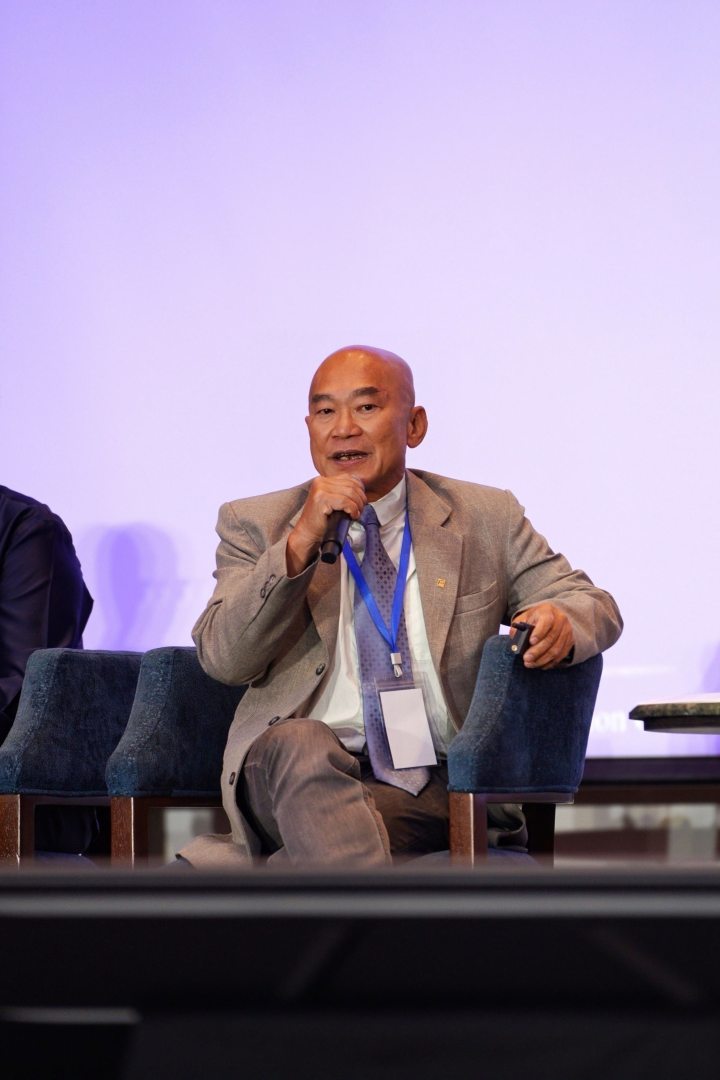
PHOTO LEGEND — Dr. Hwa A. Lim (林華安博士), at Main Forum, lecturing on "AI: An enabled enabler in healthcare & biotechnology", Main Forum, @Advancing Biotechnology & Healthcare Collaboration towards a China-Malaysia Community with a Shared Future, Malaysia-China Economic Cooperation Outlook Forum 2026, Mandarin Oriental Hotel, Kuala Lumpur City Center (KLCC), May 21, 2026.

Dr. Hwa A. Lim (林華安博士) is uniquely positioned at the nexus of technology and life sciences. His professional interests connect scientific research, bioinformatics, biotechnology, data, artificial intelligence, entrepreneurship and global corporate strategy.

His immersion in the highly innovative Silicon Valley ecosystem provides a distinctive perspective on how scientific discoveries, technological advances, business opportunities and collaborative networks can converge.

The Triple Helix Ecosystem

An important framework for understanding innovation is the Triple Helix model — the co-evolution and interaction of academia, industry and government.

ACADEMIA Research & Knowledge
INDUSTRY Technology & Commercialization
GOVERNMENT Policy & Infrastructure

This ecosystem can facilitate the transition from basic scientific research to technological development and, ultimately, commercialization. It also encourages collaboration across disciplines, institutions and international boundaries.

From Data to Big Data to AI

Dr. Lim's perspective reflects an important technological progression: the collection of data, the management and analysis of increasingly large datasets, and the emergence of AI as a powerful tool for extracting insights and creating value.

In the life sciences, this progression is especially significant. Biological data can become biological knowledge, and biological knowledge can become the foundation for new diagnostics, therapies, products and businesses.

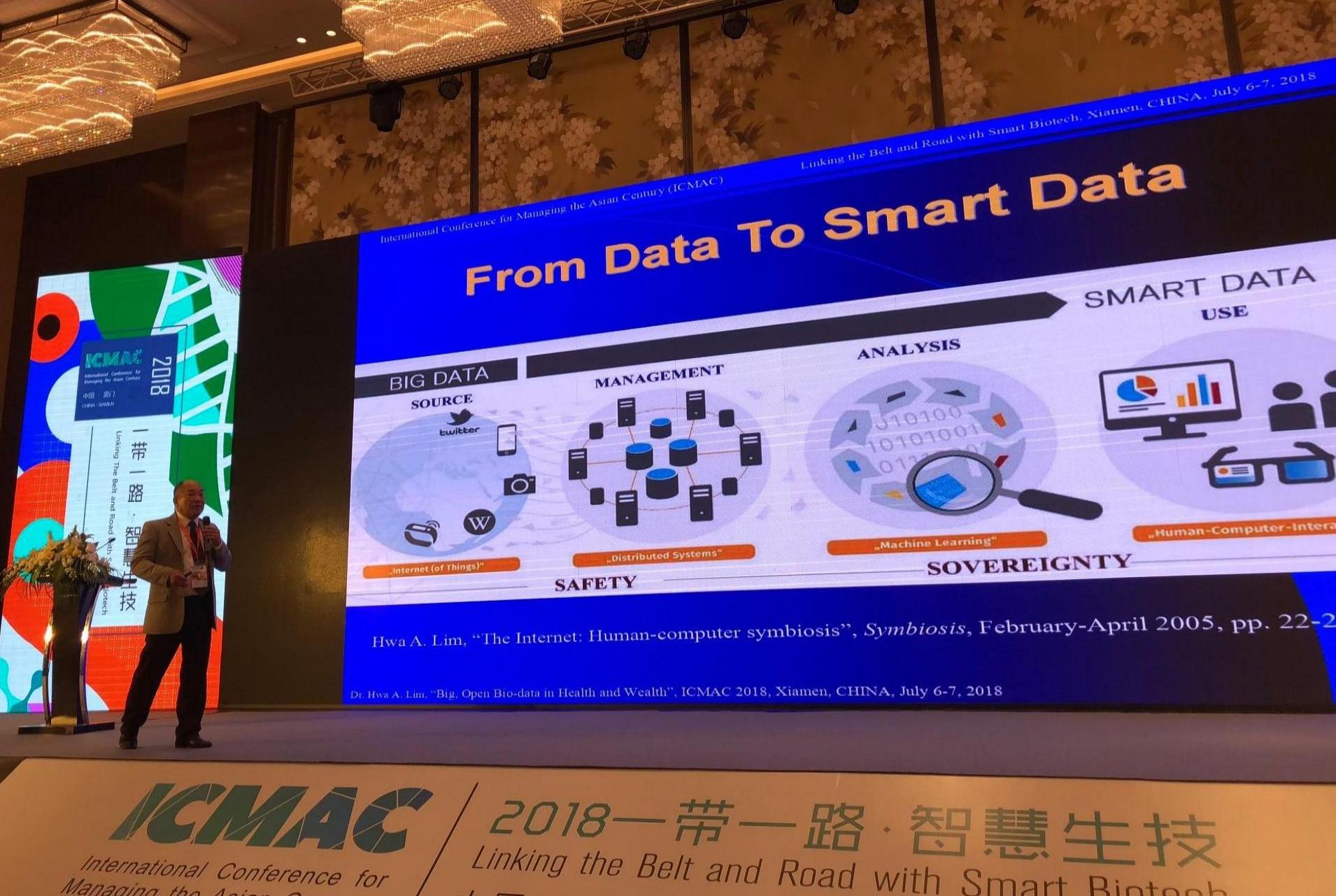
"We are as 'god' and might as well get 'good' at it so we can deliver 'good goods' (both in the commercial and humanitarian sense)..."
— Dr. Hwa A. Lim, commenting on rapid advances in biomedicine, in his keynote lecture, "Big, Open Q&A, AI in Health and Wealth", 2018 ICMAC, "Linking the Belt and Road with Smart Biotech", DoubleTree Hotel, Xiamen, China, July 7, 2018.
Dr. Hwa A. Lim, scientist, author, educator and technology strategist
PHOTO LEGEND — Dr. Hwa A. Lim (林華安博士), Keynote Speaker, "Big, Open Bio-data in Health and Wealth", Intl Conference for Managing the Asian Century, Linking the Belt & Road with Smart Biotech, Xiamen, CHINA, July 6-7, 2018.
SELECTED PUBLICATIONS & CONTRIBUTIONS

Ideas. Research. Knowledge.

ARTICLE

Bioinformatics in Communicable Diseases — The Way Forward

Dr. Hwa A. Lim. Asia Pacific Biotech, 14(11), 2010.

An exploration of bioinformatics and its potential contributions to the understanding and management of communicable diseases.

BOOK · 2002

Genetically Yours

Bioinforming, Biopharming and Biofarming

Dr. Hwa A. Lim. World Scientific Publishing Co., Riverside, New Jersey, USA, 2002. 417 pages.

A broad exploration of genetics, bioinformatics and the possibilities of biotechnology.

BOOK · 2006

Multiplicity Yours

Cloning, Stem Cell Research and Regenerative Medicine

Dr. Hwa A. Lim. World Scientific Publishing Co., Hackensack, New Jersey, USA, 2006. 412 pages.

An exploration of cloning, stem cell research and the emerging possibilities of regenerative medicine.

LECTURE · BIOINFORMATICS

The Future of Bioinformatics

Lecture by Dr. Hwa A. Lim, San Jose, California, USA.

Exploring the evolving relationship between biological information, computing and scientific discovery.

SELECTED INTERNATIONAL LECTURES

Sharing Knowledge. Connecting Disciplines.

Nanotechnology: Development, Business and Prospects

Keynote Lecture, Bay Area Chamber of Commerce, September 6, 2005, Santa Clara Marriott Hotel, Santa Clara, California, USA.

Nanotechnology: Business Development and Opportunities

Keynote Lecture, Association of the Chinese Chamber of Commerce in Malaysia, August 4, 2005, Menara Promet, Kuala Lumpur, Malaysia.

Informatics, Bioinformatics, and Bininformatics

Plenary Lecture, International Meeting on Frontiers of Physics, commemorating the centennial of Einstein's 1905 breakthrough paper on relativity, July 25–29, 2005, The Mines, Kuala Lumpur, Malaysia.

Explore more of Dr. Lim's scientific, technological and entrepreneurial perspectives: Dr. Hwa A. Lim — Official Profile ↗

THE MAVERICK'S READING ROOM

Curiosity Has No Borders.

Omics does not exist in isolation. Follow these interconnected fields to discover more ideas, technologies and opportunities.

Artificial Intelligence

Explore AI, machine learning, generative AI and the transformation of human knowledge and creativity.

Explore AI ↗

Bioinformatics

Discover how biology, mathematics, computing and data science come together to understand life.

Explore Bioinformatics ↗

Biotechnology

Explore the applications of living organisms, biological processes and engineered systems.

Explore Biotechnology ↗

Big Data, Open Data & Smart Data

Understand the data revolution that powers modern scientific discovery and AI.

Explore Data Sciences ↗

Stem Cells & Regenerative Medicine

Discover cellular research, tissue repair, regenerative approaches and future therapeutic possibilities.

Explore Regenerative Medicine ↗

Nanotechnology

Explore nanoscale materials, nanomedicine, nanobiotechnology and advanced applications.

Explore Nanotechnology ↗

Hightech & Infotech

Discover the technologies reshaping industries, careers and the global economy.

Explore Hightech ↗

Green Technology

Explore biotechnology, environmental sustainability, ecological innovation and the circular economy.

Explore GreenTech ↗

Meet Dr. Hwa A. Lim

Discover the scientist, author and technology thinker behind the D'Trends science and technology knowledge series.

Explore Dr. Lim's Journey ↗
EXPLORE MORE AT D'TRENDS ↗
QUESTIONS & ANSWERS

Omics Explained. Without the Jargon.

New to Omics? Here are answers to some of the most frequently asked questions.

What is Omics science in simple terms?

Omics is the large-scale study of biological components, such as genes, RNA, proteins, metabolites and other molecular features. It helps scientists understand how living systems work by examining many biological components together.

What are the four major types of molecular Omics?

Four foundational disciplines are genomics (DNA), transcriptomics (RNA), proteomics (proteins) and metabolomics (small molecules involved in metabolism). They provide complementary information about biological systems.

What is the difference between Omics and Multi-Omics?

Omics generally refers to studying one broad category of biological information. Multi-Omics integrates multiple categories, such as genomics, proteomics and metabolomics, to provide a more comprehensive understanding.

How does Omics contribute to precision medicine?

Omics helps researchers understand molecular differences between individuals and diseases. These findings may contribute to biomarker discovery, treatment selection, drug development and personalized healthcare, subject to clinical validation.

Can Omics help discover new medicines?

Yes. Omics can help researchers identify potential drug targets, investigate disease pathways, understand drug responses and study toxicity. It is an important research resource throughout the drug-discovery and development process.

What is the role of AI in Omics sciences?

AI can assist in processing large datasets, recognizing patterns, predicting molecular structures, integrating different biological information and prioritizing research hypotheses. Experimental and clinical validation remain essential.

What is the difference between genomics and genetics?

Genetics traditionally focuses on individual genes, inherited traits and their relationships. Genomics examines the broader genetic material of an organism, including interactions among many genes and other genomic regions.

What is the difference between metagenomics and microbiomics?

Metagenomics focuses on genetic material collected from microbial communities. Microbiomics is a broader area concerned with microbial communities and their biological characteristics and functions.

What is radiomics and how does it relate to AI?

Radiomics extracts quantitative features from medical images such as CT and MRI scans. AI can help analyse these features and investigate potential diagnostic or prognostic applications. Clinical adoption requires reproducible methods and rigorous validation.

What qualifications are needed to work in Omics?

Relevant pathways include molecular biology, genetics, biochemistry, biotechnology, bioinformatics, computer science, statistics, AI, biomedical engineering and related disciplines. Interdisciplinary skills are particularly valuable.

Is Omics only useful in medicine?

No. Omics also has applications in agriculture, food science, environmental monitoring, industrial biotechnology, biodiversity research, microbial ecology and sustainable development.

Where can I start learning about Omics?

Start with genomics and bioinformatics, then explore transcriptomics, proteomics and metabolomics. Next, discover how Multi-Omics, AI and systems biology connect these disciplines. Explore the learning resources linked throughout this page.

THE FUTURE IS OPEN TO THE CURIOUS

Don't Just Study Life. Discover What Life Can Become.

The Omics revolution is an invitation to explore, question, innovate and participate. Whether you are a student, scientist, entrepreneur, technologist or simply a curious individual, there is a place for you in this extraordinary journey.

EXPLORE THE OMICS UNIVERSE ↗

Think differently. Connect disciplines. Create possibilities.

↑