Artificial Intelligence
Discover how machines can generate content, recognize patterns, assist decisions, write software, and support scientific research. Learn what AI can do—and where human judgment remains essential.
Explore AI resources ↗Welcome to the world where information becomes intelligence, ideas become inventions, and seemingly impossible problems become tomorrow's opportunities.
From artificial intelligence and powerful computer chips to robotics, big data, cybersecurity, and technologies we have yet to imagine, explore the forces changing how we live, work, create, and compete.
For the curious, the unconventional, and the ambitious. You do not need to be a computer scientist to explore high technology. You need curiosity, a willingness to learn, and the courage to question what everyone else takes for granted.
High technology (高科技) refers to advanced technologies at the forefront of innovation, including AI, semiconductors, robotics, biotechnology, and quantum technologies. Information technology (Infotech, 信息技术) focuses on using computers, software, networks, and data to create, process, protect, and share information. They overlap: modern high-tech breakthroughs frequently depend on information technology, and advances in computing help make new technologies possible.
Technology does not develop in isolated boxes. The most interesting opportunities often appear where disciplines meet. Start with a subject that intrigues you, then follow the connections.
Discover how machines can generate content, recognize patterns, assist decisions, write software, and support scientific research. Learn what AI can do—and where human judgment remains essential.
Explore AI resources ↗Vast amounts of information are useful only when we can turn them into understanding. Explore data collection, analytics, open data, and the journey from raw information to meaningful decisions.
Explore D'Trends resources ↗Meet the hardware powering everything from smartphones to AI supercomputers. Discover processors, specialized AI chips, memory, parallel computing, and the infrastructure behind digital progress.
Explore high-tech articles ↗Explore how connected devices, digital networks, cloud platforms, and edge computing make it possible to share information and run services across the world.
Explore the resource library ↗As more of life moves online, protecting identity, information, privacy, and critical systems becomes increasingly important. Learn how security and responsible technology design fit together.
Explore technology topics ↗Discover how software and intelligent machines are moving beyond screens into factories, laboratories, agriculture, transport, healthcare, and everyday environments.
Explore high-tech resources ↗Where biology meets computation, researchers can analyze DNA, investigate diseases, study biological systems, and accelerate the search for new scientific insights.
Explore bioinformatics ↗Investigate technologies that may reshape selected problems in computing, sensing, communications, and scientific research. Separate genuine progress from speculation and marketing hype.
Explore emerging technology resources ↗A useful invention does not automatically change the world. Discover why some technologies spread, others struggle, and how people, organizations, and entrepreneurs turn ideas into practical value.
Explore technology adoption ↗Artificial intelligence is increasingly woven into how people write, design, analyze, program, discover, manufacture, and make decisions. Its impact reaches well beyond chatbots.
The important question is not simply whether AI will change your field. It is how you can understand that change and participate in shaping it.
Explore further: Read the Stanford HAI 2026 AI Index Report and McKinsey's Technology Trends Outlook 2026 for research and analysis of AI capabilities, adoption, infrastructure, and emerging technologies.
One could make a large or small hammer, a big sailboat or a small one, but a user could not make a hammer that sailed the ocean, or that also performed the function of a saw or a drill…
But, in essence, one could metaphorically do such varied information handling tasks with digital technologies, using a combination of computer chips, programming languages, and software, which is why computers were such an important general-purpose technology…
— Dr. Hwa A. Lim (林華安博士)
Keynote speaker, “From biodata to bigdata,” Fortune 500 Summit, Changchun, Jilin, China, September 29, 2016.
Why this idea matters today: A traditional tool is generally designed for a relatively specific purpose. Digital technologies are different. Reprogrammable computers can support an extraordinary range of tasks, from financial modeling and scientific research to creative production and intelligent automation.
AI extends this general-purpose character in new directions. The same computing infrastructure can support many different applications, while new models and tools can make previously difficult tasks more accessible. This creates opportunities for people who understand not only technology, but also the problems worth solving.
Explore Infotronics ↗Dr. Hwa A. Lim's perspective is informed by his engagement with technology, information, innovation, and scientific communication, alongside his physical presence in Silicon Valley, California—a major global center for technology companies, research, investment, and entrepreneurship.
Being close to a technology ecosystem offers opportunities to observe how ideas move from research and prototypes toward products, markets, and everyday use. It also provides a useful vantage point from which to ask a difficult question: what happens when a new technology meets real human needs?
His published work connects several enduring themes: the global knowledge-based economy, bioinformation, human–computer relationships, innovation, and technology adoption. These themes remain relevant as AI reshapes industries and professional life.
Discover Dr. Hwa A. Lim ↗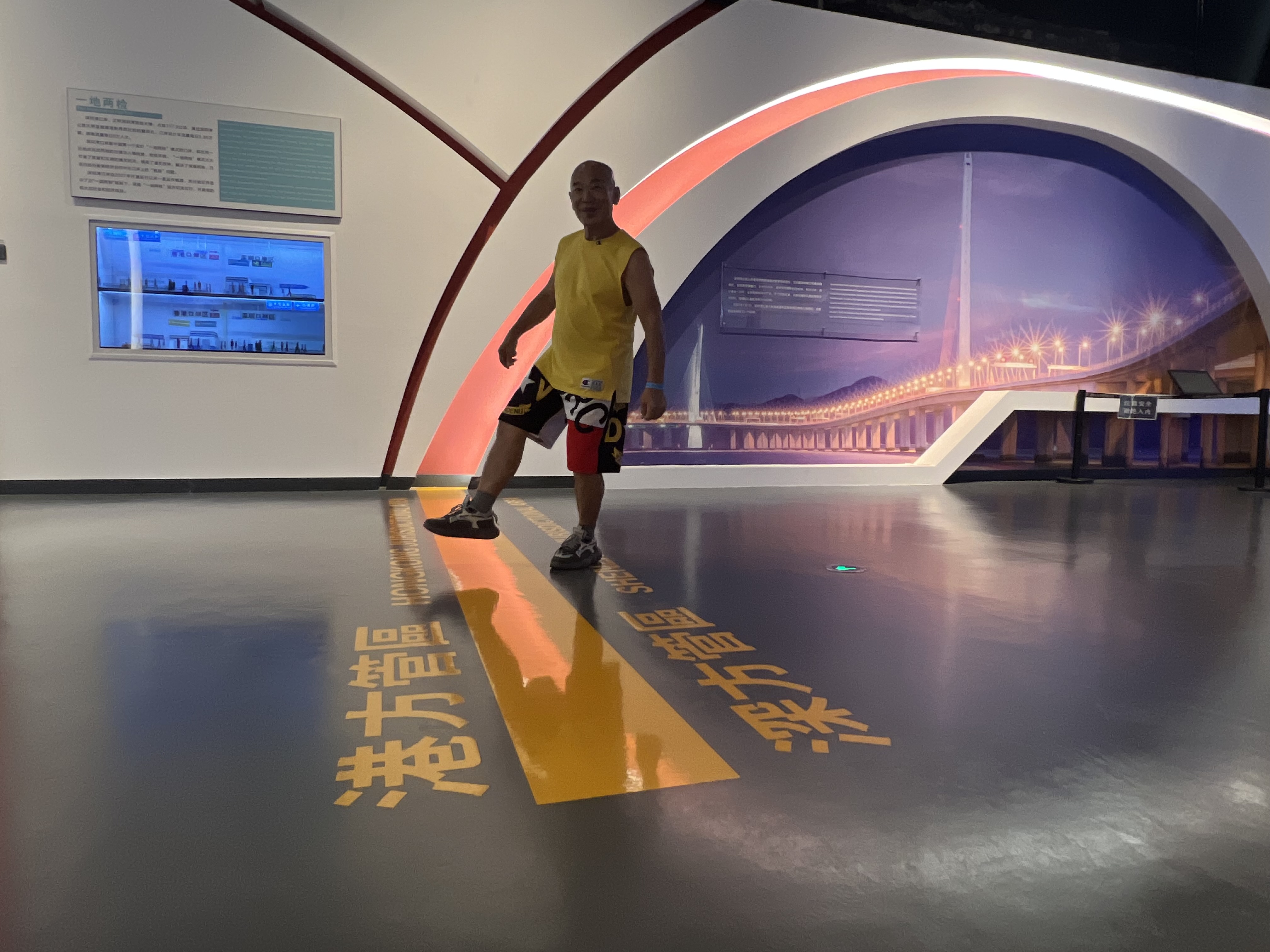 [Photo legend: Dr. Hwa A. Lim, symbolically crossing the border from Shenzhen into Hong Kong, signifying cross- and trans-disciplinary nature of disciplines.
Source:
Dr. Hwa A. Lim, "Education: a lifelonbg process", Symbiosis, December 2002, pp. 13-17.
Dr. Hwa A. Lim, "Change please, please change", Symbiosis, October 2003, pp. 8-12.
*Transmogrification of Dato' Razali Ismail in a 2004 speech or policy framework, "...towering personality, capable specialist with capable generalist".
**Transmogrification of Harvey S. Perloff in his defining philosophy of urban planning curricula (1957).
Behind every breakthrough are people asking questions, testing assumptions, exchanging ideas, and trying something that has not been done before. Use this gallery to bring that human dimension into the story.

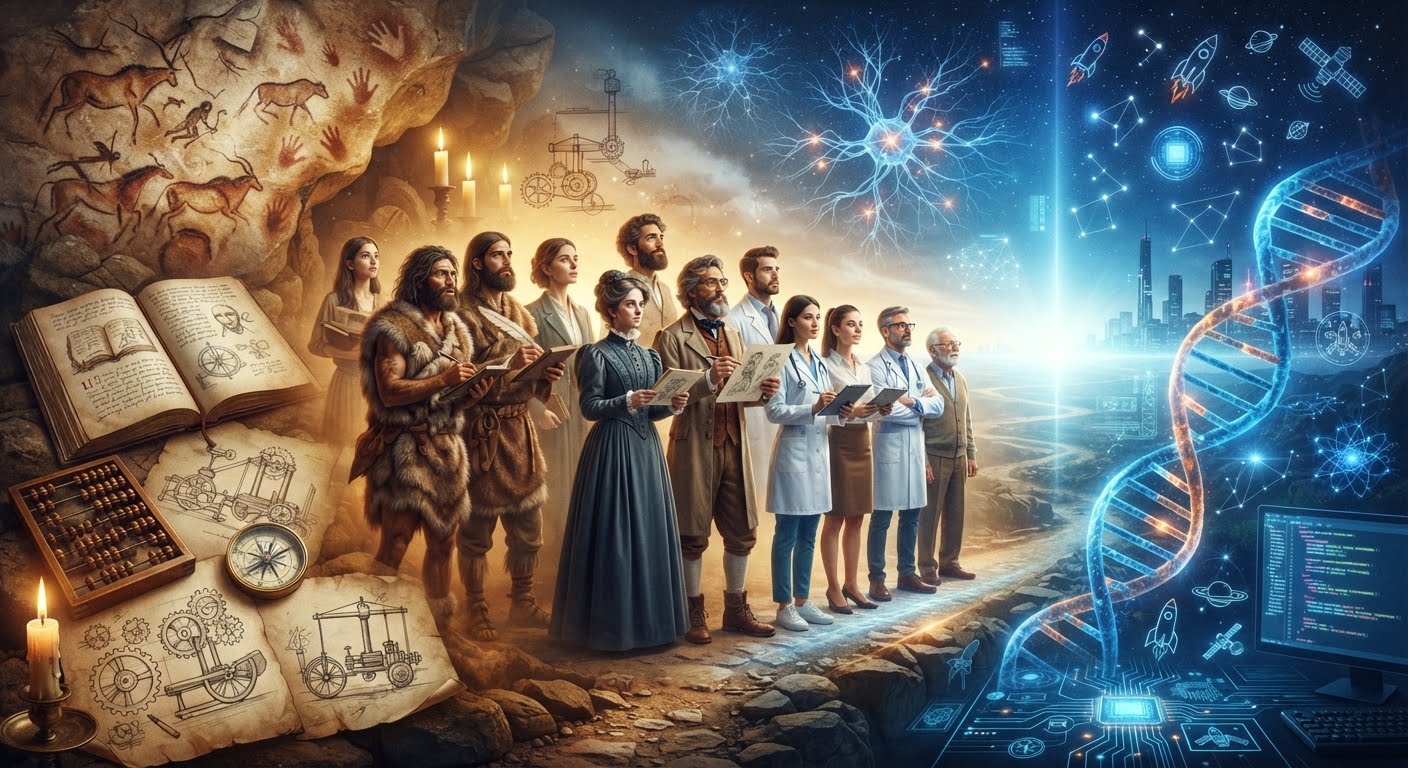
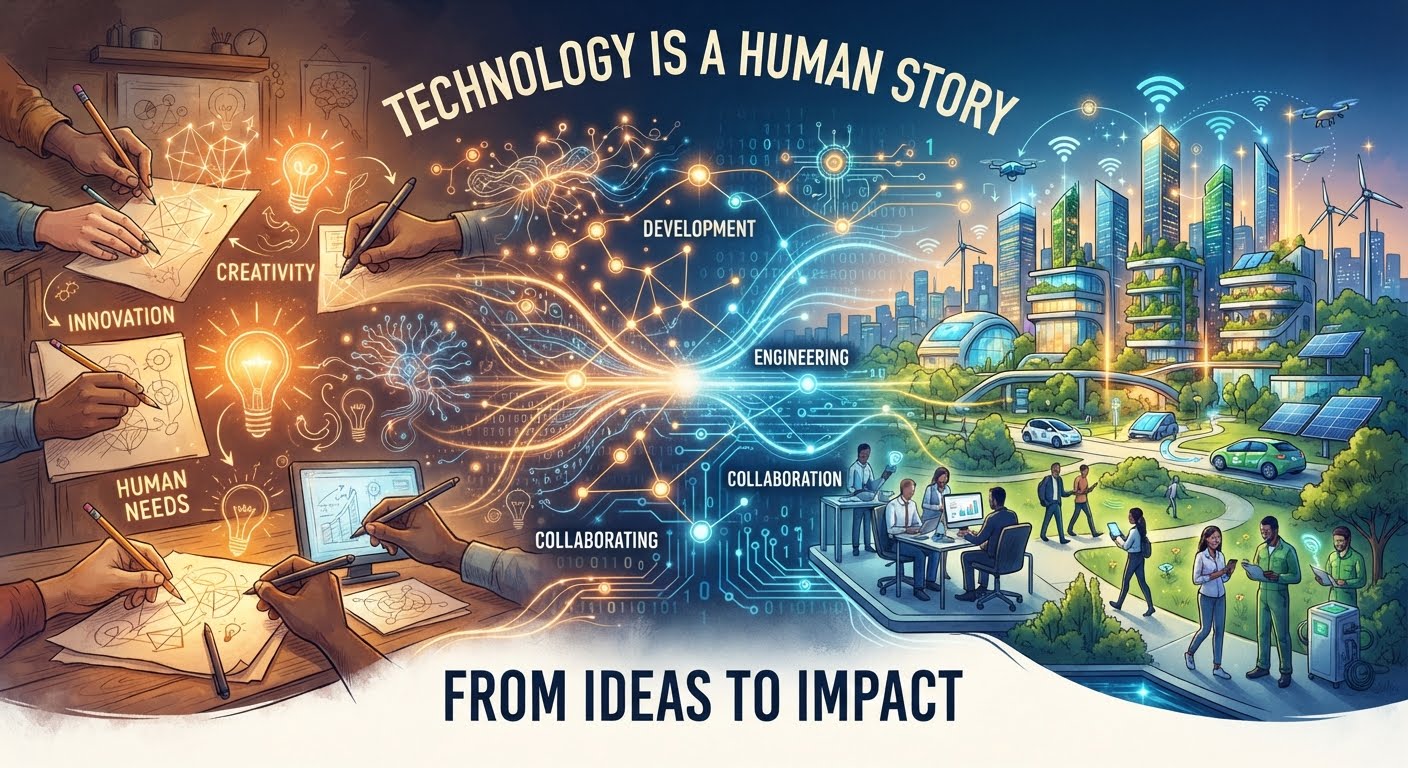
More photographs are available in the D'Trends PhotoGPT collection . Confirm image accuracy, publication rights, and caption details before using any photograph in a public-facing page.
High technology is not exclusively for people with traditional computer science degrees. Depending on the role, opportunities may also come from domain expertise, practical experience, creative ability, independent projects, or the capacity to connect different disciplines.
Explore independent projects, open-source contributions, technical writing, digital products, and unconventional ways to demonstrate your abilities. A useful portfolio can help communicate what you know, although formal qualifications remain important for many roles.
Look for recurring frustrations in healthcare, education, business, agriculture, manufacturing, and other industries. AI and digital tools can help test ideas quickly, but customer understanding, sound execution, and sustainable business models still matter.
Potential areas include software development, data analysis, AI-assisted workflows, automation, technical documentation, cybersecurity support, digital design, and technology consulting. Start with a specific customer problem and develop demonstrable results.
Build small applications, experiment with datasets, document your learning, join research projects, and collaborate across disciplines. Combine foundational knowledge with practical experiments rather than relying on certificates alone.
Explore the intersections of AI, biology, materials science, mathematics, engineering, social science, environmental research, and computing. Interdisciplinary collaboration can reveal questions that individual disciplines may overlook.
Your accumulated experience can be valuable when combined with new tools. Learn how AI and automation affect your industry, identify transferable skills, and find tasks where your judgment and experience make a difference.
Choose one real problem. Learn the minimum necessary tools. Build a small solution. Test it with real users. Document what worked, what failed, and what you learned. Then improve it. This cycle of learning and experimentation is often more valuable than waiting until you feel completely ready.
Technology may change rapidly, but many of the questions behind innovation remain remarkably consistent: how do we turn information into value, how do people adopt new tools, and how should humans work with increasingly capable machines?
Explore the following selected articles, book excerpts, and lectures by Dr. Hwa A. Lim, together with related materials from the D'Trends archive.
With Da Hsuan Feng. An exploration of information, technology, and their place in a knowledge-based economy.
Read the article ↗A look at how biological information and computational methods can support the search for new medicines.
Read the book excerpt ↗A historical exploration of the relationship between biological threats, information, and security.
Locate the article in the archive ↗An examination of the evolving relationship between people and computer technologies.
Read the article ↗A perspective on innovation, ideas, and the business of turning possibilities into practical outcomes.
Read the article ↗Why the success of a technology depends on more than the invention itself.
Read the article ↗A project proposal lecture presented to Malaysia's Ministry of Science, Technology and Innovation (MOSTI) on September 29, 2005.
Explore the lecture ↗Dr. Lim's lecture delivered to the Institution of Engineering and Technology (IET) on February 18, 2012.
Explore the lecture ↗Additional historical articles include Turbo Charging Bioinformation for Drug Discovery, published in Silicon Valley High Tech in February 2000, and the two-part article by Dr. Hwa A. Lim and Daxi Li on biological information as a business commodity and the rise of bioinformatics, published in November/December 1999. See the original Hightech resource collection for available material.
The most useful learning journey rarely ends with one subject. Follow a connection, investigate a question, or discover an entirely different field.
Discover how data, software, and biological knowledge work together to advance research and medicine.
Explore bioinformatics ↗Explore how biological systems and scientific techniques can support healthcare, industry, agriculture, and other applications.
Explore biotechnology resources ↗Discover the wider technology resources and perspectives available through D'Trends.
Visit D'Trends ↗New to the field? Start here. These concise answers introduce the main concepts before you explore further.
High technology describes advanced technologies across multiple fields, including AI, semiconductors, robotics, and biotechnology. Information technology focuses on computing, software, networks, and information management. The fields overlap because many advanced technologies depend on digital information and computing.
AI is changing how software is developed, data is analyzed, security threats are detected, digital services are delivered, and routine tasks are automated. It can improve productivity, but results depend on data quality, system design, human oversight, and the suitability of each application.
AI can automate some tasks and change the skills required for many technology roles. Its effects vary by occupation, organization, and industry. Professionals can prepare by strengthening their foundations, learning to use AI effectively, developing judgment, and adapting as work changes.
Yes, depending on the role. Technology offers pathways through formal education, vocational training, research, independent projects, entrepreneurship, and experience in other industries. Some positions require specific qualifications, but a strong portfolio and demonstrable skills can also be valuable.
Start with your interests and the problems you want to solve. Beginners may explore AI literacy, programming, data analysis, networking, cybersecurity fundamentals, digital design, or robotics. Learn basic concepts, build small projects, and deepen your knowledge based on experience rather than trying to learn everything at once.
Infotronics is a term used to emphasize the relationship between information and technology. In the context of Dr. Hwa A. Lim and Da Hsuan Feng's 2000 article, the idea connects information technologies with a global, knowledge-based economy. For a fuller historical explanation, consult the original article.
Silicon Valley is a major technology ecosystem in California, bringing together companies, researchers, investors, entrepreneurs, and skilled workers. Its influence comes from the interaction of technical research, business development, investment, and networks of people and organizations.
Begin with the D'Trends Hightech resource collection and Dr. Hwa A. Lim's website . These resources provide access to selected articles, book excerpts, and lectures related to information technology, innovation, and scientific research.
Be curious enough to explore. Be bold enough to experiment. Be thoughtful enough to question. And be practical enough to turn what you learn into something useful.
Whether you are a student, researcher, entrepreneur, freelancer, experienced professional, or simply someone fascinated by what comes next, there is more than one way to participate in the technology revolution.