What is Big Data in simple terms?
Big Data describes datasets whose scale, complexity,
variety or speed can exceed the practical limits of
traditional processing approaches. It becomes useful
when we can analyse it to answer meaningful questions.
What is the difference between Big Data and Open Data?
Big Data describes characteristics of data, such as
its size, variety and rate of generation. Open Data
describes the conditions under which data can be
accessed, reused and shared. A dataset can be big
and open, small and open, or big but restricted.
What exactly is Smart Data?
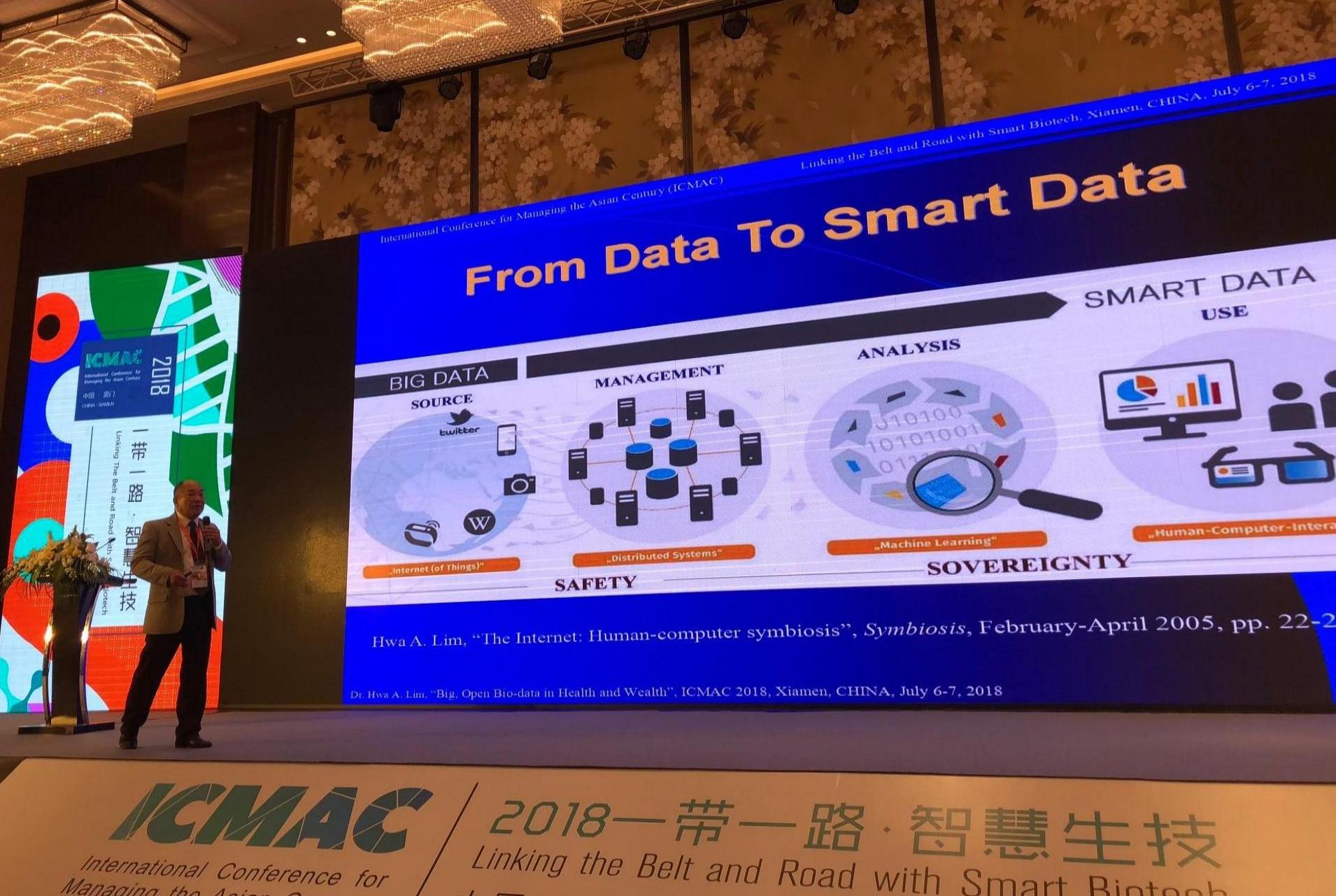
Smart Data generally refers to data that has been
made more useful for a particular purpose through
selection, quality checks, context, connections
or analysis. Because usage varies by industry,
always clarify what the term means in a particular
project.
How does data become information, knowledge and wisdom?
Data provides observations. Information organises
them in context. Knowledge develops through
interpretation, experience and evidence. Wisdom
applies knowledge with judgement, ethics and
consideration of consequences.
Why is good data important for AI?
Depending on the system, data may be used to train
an AI model, evaluate it, provide context or support
its operation. Inaccurate, incomplete, biased or
poorly documented data can undermine reliability.
Computing power cannot fix every underlying data problem.
Does Big Data always require AI?
No. Many useful Big Data applications rely on
databases, statistics, traditional analytics,
visualisation or other techniques. AI is one
possible tool, not a requirement for every data project.
Can I learn data skills without a university degree?
Yes. You can begin with spreadsheets, basic statistics,
charts and small projects using appropriately licensed
public datasets. More advanced work may require
deeper mathematical, programming or domain-specific
knowledge, depending on your goals.
What are the risks of using data?
Risks include privacy violations, security breaches,
poor data quality, misleading conclusions, bias,
inappropriate sharing and misuse. Responsible data
work includes suitable safeguards, documentation,
access controls and honest communication of limitations.
What is the future of Big Data in the AI era?
Data will remain important to AI development and use.
Opportunities include better data preparation,
integration, evaluation, governance and domain-specific
applications. The strongest results require more than
scale: they require useful data, suitable computing,
sound methods and responsible human oversight.