See what was once invisible
Specialized microscopes and measurement techniques let researchers investigate structures far smaller than the human eye can resolve.
What if the next breakthrough in medicine, clean energy, intelligent materials or computing began with something almost too small to imagine? Welcome to nanotechnology: where the incredibly small opens extraordinary possibilities for the world at large.
From molecular diagnostics to advanced electronics, nanotechnology is helping scientists and innovators rethink what materials and devices can do. Its future belongs not only to scientists, but also to entrepreneurs, designers, interdisciplinary thinkers and curious minds willing to ask different questions.
One billionth of a meter. A nanometer is far smaller than the width of a human hair.
Materials at the nanoscale can behave differently from the same materials in larger forms.
Physics, chemistry, biology, engineering, computing and business can all play a role.
Nanotechnology is the science and engineering of understanding, designing and controlling matter at extremely small scales, commonly around 1–100 nanometers for many engineered nanomaterials.
At these dimensions, the behavior of a material may change because its surface becomes more influential or because quantum effects become important. This creates opportunities to develop materials, sensors and devices with useful new characteristics.
The exciting part is not simply making things smaller. It is discovering what becomes possible when we design materials and systems with greater control over their smallest building blocks.
Specialized microscopes and measurement techniques let researchers investigate structures far smaller than the human eye can resolve.
Engineers can investigate how particle size, shape, structure and surface properties influence strength, conductivity, light and chemical behavior.
Nanotechnology creates meeting points between biology, medicine, electronics, materials science, computing and commercial innovation.
Further reading: National Nanotechnology Initiative — Applications · NIOSH — Nanotechnology FAQs
Select a scale below to explore how our understanding changes as we move from familiar objects toward the molecular world.
At everyday scales, we experience the materials, devices and objects that shape daily life.
Think of a phone, a water bottle or a solar panel.
These comparisons are illustrative, not to scale. Actual biological and engineered structures vary greatly in size.
Nanotechnology is not confined to laboratories. It already contributes to products and processes in several industries, while new applications continue to be investigated.
Nanotechnology can help researchers develop diagnostic tools, imaging agents, drug-delivery systems and specialized medical materials. Some nanotechnology-based medicines are already in clinical use; other approaches remain experimental.
Explore nanomedicine ↗Nanoscale engineering supports modern semiconductor devices, advanced memory, quantum-dot displays, specialized sensors and research into future computing architectures.
Explore nanoelectronics ↗Nanostructured materials are being used and studied to improve electrodes, catalysts, solar technologies and other energy systems. Performance depends on the material, design and manufacturing process.
Explore energy research ↗Specialized membranes, filters and nanoscale sensors may help detect contaminants, separate substances and support water treatment. Real-world performance, cost and environmental impacts matter.
Explore environmental applications ↗Nano-engineered coatings and composites can help tailor surface behavior, durability, weight, heat management and other properties in products ranging from electronics to transportation.
Explore advanced materials ↗Research explores improved packaging, sensors, delivery systems and agricultural applications. Each proposed use requires appropriate evaluation of safety, effectiveness and regulation.
Explore food-related research ↗
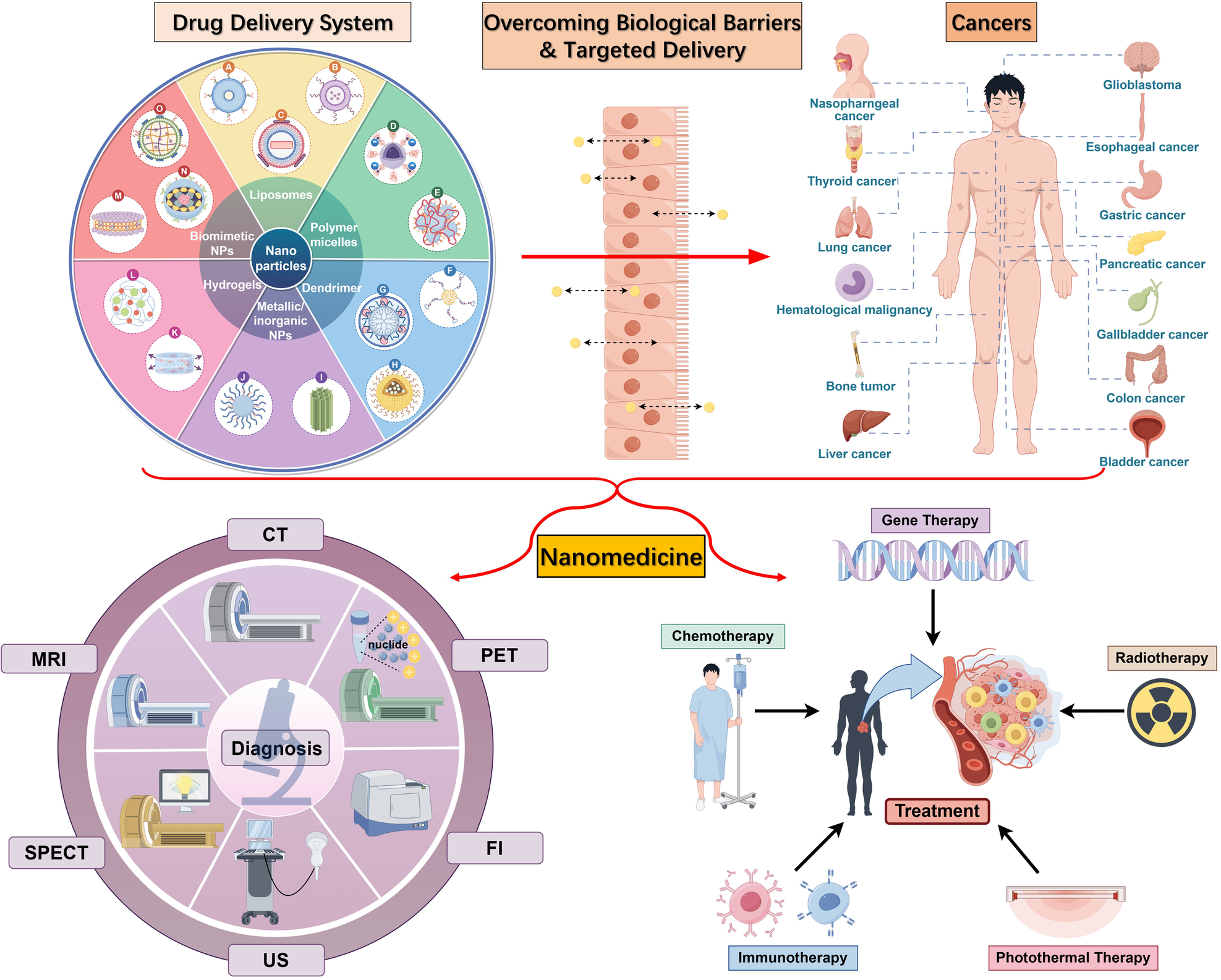
Some of the most promising opportunities emerge when nanotechnology meets other fields. This convergence is especially important in the era of artificial intelligence and data-driven research.
Nanobiotechnology applies nanoscale science and engineering to biological systems. Researchers investigate how specialized materials can support biosensors, diagnostic tests, biological analysis and other life-science applications.
Bioinformatics helps scientists interpret biological data. Combined with nanoscale measurement and experimental tools, it can help researchers analyze complex results and identify patterns worth testing.
AI can assist with materials-data analysis, literature discovery, candidate screening, experimental planning and prediction. AI-generated predictions are hypotheses to test, not substitutes for measurement or scientific validation.
Turning a scientific discovery into a useful product requires more than a clever material. Teams must consider customer needs, manufacturing, intellectual property, regulation, cost, reliability and adoption.
In the domain of the incredibly small, humanity is discovering its largest ideas.
— Dr. Hwa A. Lim (林華安博士), Public Lecture, “NanoBiotechnology,” University Technology Malaysia, Johore Bahru, Malaysia, September 24, 2002.
Artificial intelligence is opening new ways to search scientific literature, analyze experimental data, predict material properties and help researchers prioritize possible experiments.
Nanotechnology offers a particularly interesting challenge because outcomes can depend on many interacting factors: composition, shape, size, surface chemistry, processing and operating conditions.
Use AI-assisted tools to organize research, compare findings, identify patterns and generate promising questions for further investigation.
Explore candidate materials, possible structures and experimental conditions. Predictions need independent validation.
Test performance, reproducibility, safety, manufacturability and practical value before making claims about real-world benefits.
林華安博士
Dr. Hwa A. Lim is a scientist and technology-business executive whose documented work spans scientific research, biotechnology, bioinformatics, nanotechnology and technology commercialization.
His nanotechnology-related publications and lectures date back to the early 2000s. His work has explored the convergence of biotechnology and nanotechnology, diagnostics, drug delivery, fluorescent nanocrystals and the broader scientific and business opportunities associated with emerging technologies.
Based professionally in Silicon Valley, California, Dr. Lim operates within a region known for its technology companies, research networks, entrepreneurship and venture-capital ecosystem. This geographic context provides a valuable lens through which to examine how scientific ideas can connect with commercial opportunities.
Silicon Valley is not a guarantee of success. Rather, its concentration of technology expertise, experienced founders, investors and potential collaborators can offer useful opportunities for people who know how to build relationships, test assumptions and turn ideas into practical value.
The following selected milestones illustrate Dr. Lim's documented involvement in nanotechnology-related publications and scientific discussions. They are a selection, not a complete career chronology.
Dr. Lim delivered a special lecture on the convergence of biotechnology and nanotechnology at a workshop honoring Professor Britton Chance at the University of Texas Southwestern Medical Center in Dallas, Texas, on October 18, 2001.
At BioMalaysia 2002, Dr. Lim presented a plenary lecture on “Biochip Technology Utilizing Fluorescent Nanocrystals,” connecting nanoscale materials with biological measurement and analysis.
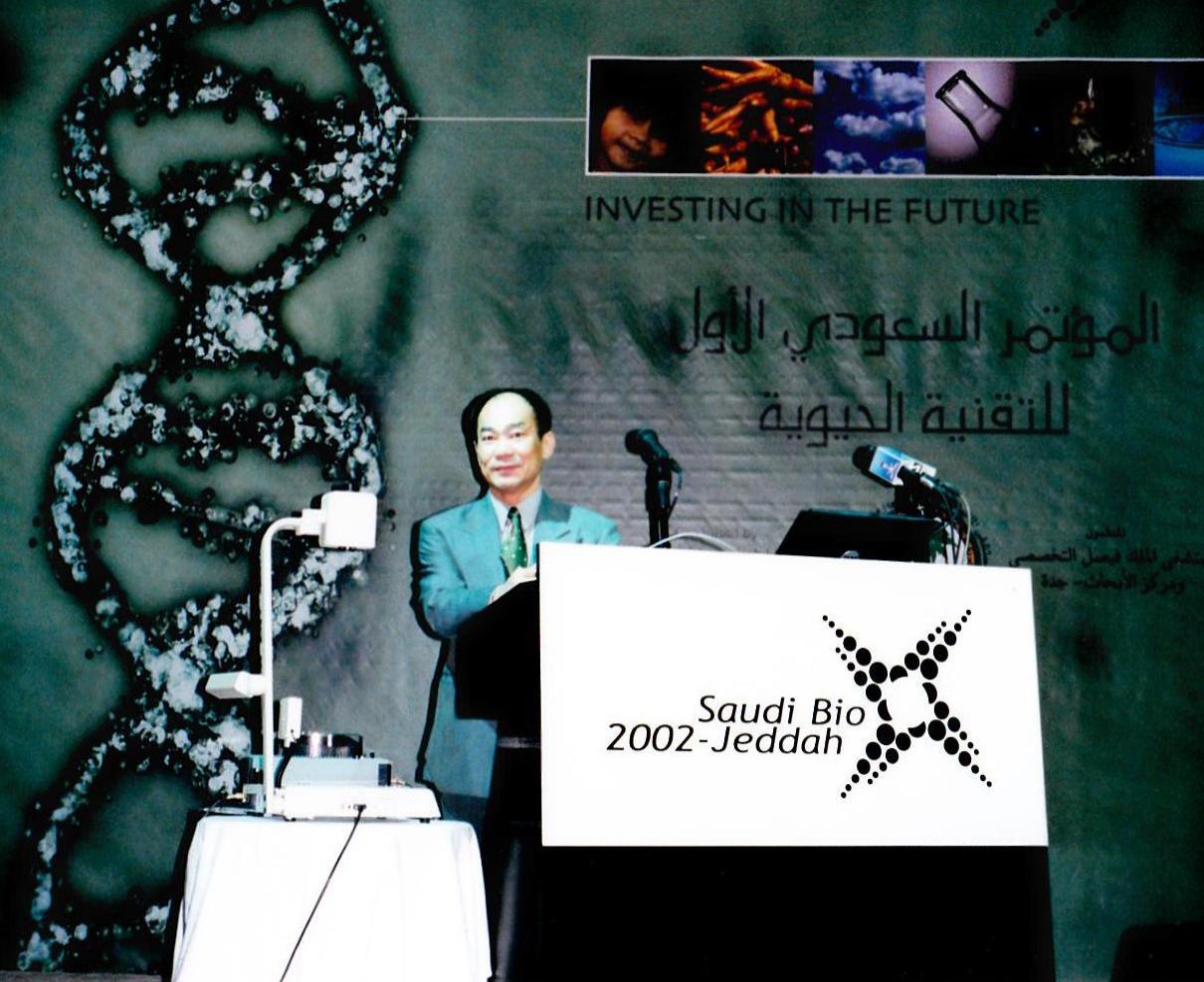
Dr. Lim spoke on diagnostic systems utilizing nanocrystals at SaudiBio2002 in Jeddah, Saudi Arabia, on April 6, 2002.
On September 24, 2002, Dr. Lim delivered a public lecture titled “NanoBiotechnology” at University Technology Malaysia in Johore Bahru, Malaysia. The lecture is also the source of the quotation featured on this page.
Dr. Lim published “Bioinformatics, nanotechnology & SARS” in Symbiosis in October 2003, exploring the relationship between these emerging scientific and technological areas.
Dr. Lim delivered a plenary lecture on applications of nanotechnology in biotechnology at the International Conference on Bioinformatics in Penang, Malaysia, September 7–10, 2003.
Dr. Lim's documented activities included a keynote lecture on nanotechnology in diagnostics and drug delivery in Lucknow, India, in February 2004, and a lecture on nanotechnology development, business and prospects in Santa Clara, California, on September 6, 2005.
Nanotechnology is interdisciplinary by nature. You do not necessarily need to follow a single, traditional route to contribute to its development. Your best pathway depends on your interests, qualifications, experience and the kind of work you want to do.
Investigate unusual questions at the intersection of physics, chemistry, biology and engineering. Build a foundation in experimental methods, critical thinking and reproducible research.
Combine data analysis, programming and machine learning with materials research. Learn how to evaluate scientific evidence and validate computational predictions.
Investigate unmet needs in healthcare, materials, manufacturing or environmental monitoring. Understand customers, costs, regulation, production and routes to market.
Depending on your qualifications, offer services in scientific writing, technical communication, data analysis, market research, visualization or specialized software development.
Explore degrees and courses in materials science, chemistry, physics, biomedical engineering, biotechnology, electrical engineering or related interdisciplinary programs.
Bridge research and practical needs through technology scouting, product strategy, scientific partnerships, project coordination or technology commercialization.
The potential of nanotechnology is exciting, but small size does not automatically mean greater safety, better performance or lower cost. The properties that make a material useful may also create questions that need careful evaluation.
The safety of a nanomaterial depends on factors such as its composition, size, shape, surface properties, dose, exposure route and intended use. Appropriate testing and exposure controls are important for researchers, workers and consumers.
Researchers and manufacturers should investigate what happens when nanomaterials are produced, used, released, recycled or disposed of. Environmental benefits should be assessed alongside possible risks.
Commercialization requires reproducibility, reliable manufacturing, quality control, realistic cost estimates and evidence that a product performs in its intended setting.
Transparent communication, appropriate regulation, responsible research and clear evidence help society distinguish genuine progress from exaggerated claims.
Further information: CDC / NIOSH nanotechnology and worker-safety FAQs · FDA nanotechnology programs · EFSA nanotechnology topic
Nanotechnology becomes even more interesting when explored alongside neighboring fields. Use the following resources as starting points for deeper reading, study and research.
Explore the original collection of nanotechnology articles, lectures, historical materials and nanobiotechnology resources.
Visit the archive →Discover how intelligent software and data-driven methods are influencing research, engineering and technological development.
Explore AI at D'Trends →Understand the role of data in scientific discovery, decision-making and the development of intelligent systems.
Explore data technologies →Explore technologies that use biological systems, organisms or biological processes to address challenges in health, industry and agriculture.
Explore biotechnology →Learn how computing, statistics and biological knowledge work together to extract meaning from complex life-science data.
Explore bioinformatics →Supplement the historical D'Trends archive with current information from scientific agencies and research organizations.
Visit Nano.gov →Clear answers to common questions about nanotechnology, its applications and its future.
Nanotechnology is the science and engineering of understanding and controlling matter at extremely small scales, commonly around 1–100 nanometers for many engineered nanomaterials. At these scales, some materials can exhibit properties different from those of the same materials in larger forms.
One nanometer is one billionth of a meter, or 0.000000001 meter. Nanometers are used to describe very small structures, including many engineered nanomaterials and molecular features.
Nanotechnology contributes to applications in electronics, coatings, some medicines, diagnostics, cosmetics, advanced materials and other products. Additional uses in energy, water treatment and healthcare are at different stages of development.
Nanobiotechnology combines nanoscale science and engineering with biological systems. It can support research into biosensors, diagnostic platforms, drug delivery, imaging and other applications involving living systems or biological materials.
AI can help analyze research data, identify patterns, explore candidate materials, search scientific literature and prioritize experiments. Experimental measurements and independent validation remain necessary to establish whether predictions are correct.
There is no single answer for every nanomaterial. Safety depends on the substance, its physical and chemical characteristics, exposure, dose and intended application. Appropriate testing, manufacturing controls and regulation are important.
Yes. Depending on the role, people may contribute through chemistry, biology, engineering, computing, scientific communication, data analysis, business development or commercialization. Laboratory research may require specialized qualifications and technical training.
Dr. Hwa A. Lim is a scientist and technology-business executive with documented publications and lectures on nanotechnology, nanobiotechnology, diagnostics, drug delivery and the convergence of biotechnology and nanotechnology. His historical materials are available through the D'Trends nanotechnology archive.
Whether you are a student exploring a new discipline, a researcher pursuing a difficult question, an entrepreneur looking for an unmet need or simply someone fascinated by how the world works, nanotechnology offers a fresh perspective on what science and innovation can achieve.
Stay curious. Connect disciplines. Question assumptions. And remember that the most promising technological opportunities often appear where different ideas meet.