Stem Cell Research
Discover how remarkable cells with self-renewal and developmental potential are opening new windows into human biology, disease and treatment.
Discover stem cells →What if medicine could do more than treat symptoms? What if science could help the body repair, restore and regenerate itself? Welcome to the fascinating frontier where biology meets technology — and where the future of healing is being reimagined.
Traditional medicine has achieved extraordinary things. Yet many conditions still leave damaged tissues, lost functions or limited treatment options. Regenerative medicine explores another possibility: helping biological systems repair or replace what has been damaged.
Discover how remarkable cells with self-renewal and developmental potential are opening new windows into human biology, disease and treatment.
Discover stem cells →Explore approaches that aim to repair, replace or restore damaged cells, tissues and biological functions.
Explore applications →See how biotechnology, AI, nanotechnology, biomaterials, robotics and advanced imaging work together to push research forward.
Meet the technologies →“Regenerative medicine is not about replicating the past through a clone; it is about giving the future a second chance within ourselves.”
Delivered at a workshop celebrating Professor Britton Chance's 88th birthday, the phrase "second chance" carried a playful birthday reference — and a much bigger message about the possibilities of regenerative science.
Stem cells are special biological cells with two important abilities: they can make more cells like themselves, and under suitable biological conditions, they can develop into specialized cells.
Think of them as nature's versatile starting materials. Depending on their type and environment, they can give rise to cells involved in blood, skin, muscle, nerve and many other tissues.
Their behaviour is not unlimited or automatic. Different stem cells have different capabilities, and directing them safely and reliably is one of the great challenges of modern biomedical science.
Learn from the US National Institutes of Health →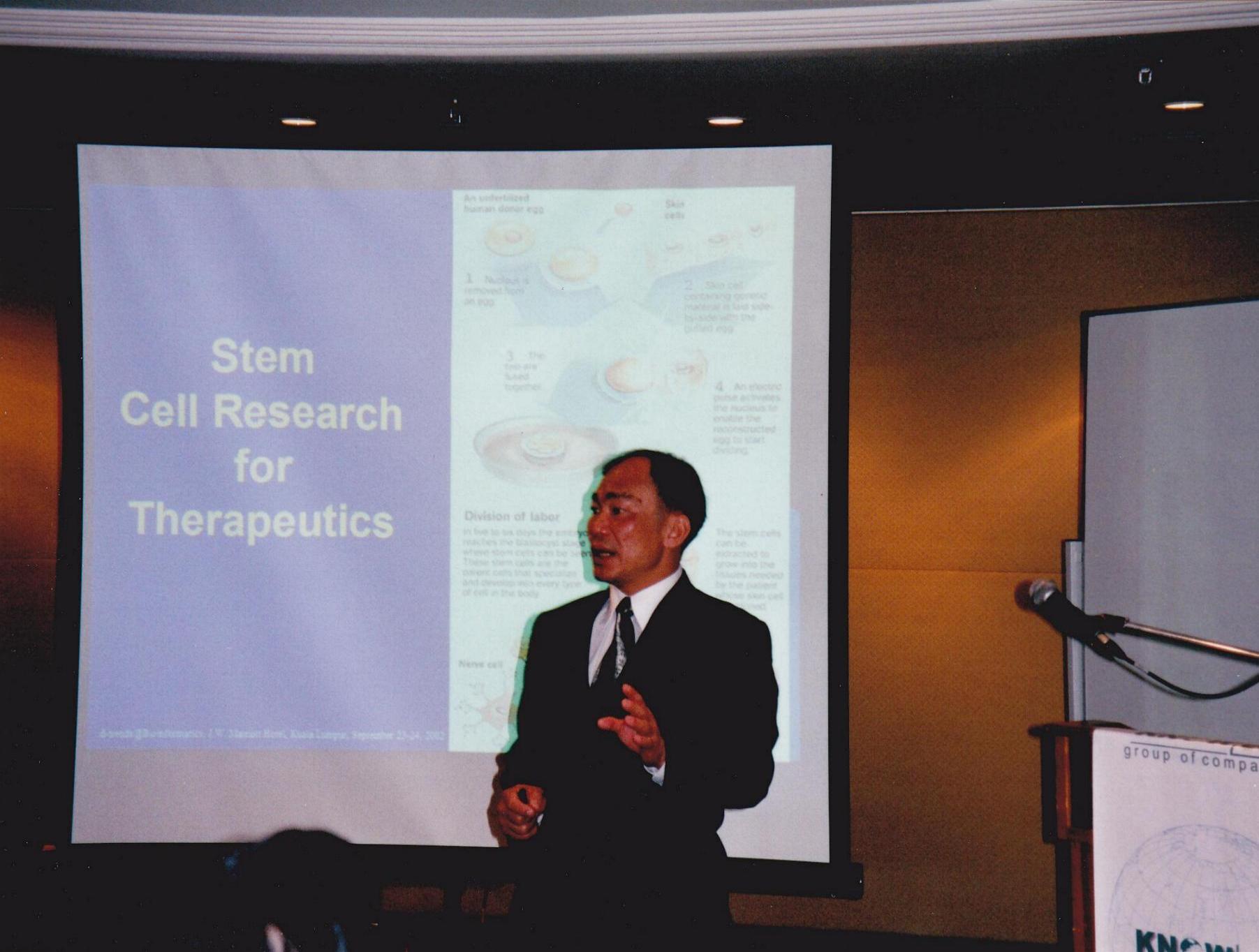
Pluripotent cells capable of developing into nearly all cell types of the body. They are valuable for understanding early human development and studying potential therapies.
Cells found in particular tissues, where they contribute to maintenance and repair. Blood-forming stem cells are an important example with established medical applications.
Ordinary adult cells can be reprogrammed in the laboratory into a pluripotent-like state. This discovery has transformed disease modelling, drug research and personalized medicine.
Its impact extends far beyond one disease or one medical specialty. Researchers are investigating how cells, tissues, biomaterials and engineered biological systems may contribute to new approaches in healthcare.
Blood-forming stem cell transplantation is an established treatment for selected blood cancers, bone marrow disorders and immune-system conditions. Newer approaches are exploring improved donor matching, cell processing and gene-corrected cells.
Stem-cell-derived neural cells and organoid models are being investigated to understand neurological diseases, model brain development and explore potential restorative treatments.
Scientists are studying cardiac cells, tissue patches and engineered environments to understand heart damage and investigate ways to restore cardiac function.
Stem-cell-derived insulin-producing cells and protective delivery systems are being investigated as possible approaches to restoring aspects of pancreatic function.
Cell-based approaches, engineered skin substitutes and advanced biomaterials are contributing to research into wound repair, burns and tissue reconstruction.
Tissue engineering, cell-based research and biomaterials are being explored for cartilage repair, bone regeneration and the treatment of musculoskeletal injuries.
Retinal cells and other ocular cell-based approaches are being studied for conditions that damage the light-sensitive tissues of the eye.
Cell engineering and immune-cell therapies are reshaping selected cancer treatments. Researchers are also exploring how stem cells and tumour models can improve drug discovery.
Important: These areas have different levels of clinical maturity. Some treatments are established for specific indications; others remain experimental or preclinical.
Stem cell research does not exist in isolation. Its progress increasingly depends on an ecosystem of complementary technologies — from nanoscale materials to artificial intelligence and advanced manufacturing.
AI helps researchers analyse complex biological data, interpret microscopy, classify cell states, predict experimental outcomes and accelerate research planning.
Explore AI →Miniature, three-dimensional tissue models can reproduce selected features of human organs. They offer new ways to investigate disease, study drug responses and explore personalized research.
Explore organoid research →Advanced printing techniques position living cells and biological materials in carefully designed structures, supporting research into engineered tissues and organs.
Nanomaterials and nanoscale delivery systems can help researchers investigate cell environments, molecular signalling, drug delivery and tissue repair.
Explore nanotechnology →Technologies such as CRISPR-based editing allow researchers to study gene function and investigate ways to correct selected genetic defects in cells.
Scaffolds, hydrogels and other materials provide environments that support cell growth, organisation and interactions with surrounding tissues.
Explore biotechnology →Advanced molecular tools reveal what individual cells are doing and how different cell populations are organised within a tissue.
Automated cell culture, quality testing, controlled manufacturing and scalable production are essential to developing reliable cell-based products.
Genomics, proteomics, computational biology and large-scale datasets help transform biological observations into useful scientific insights.
Explore bioinformatics →Biology is extraordinarily complex. A single tissue can contain thousands of interacting cell types, molecular signals and changing environmental conditions.
AI and computational methods are helping researchers make sense of this complexity. They can support the analysis of large biological datasets, identify patterns in cell behaviour, assist experimental design and help researchers explore promising combinations of cells and biomaterials.
The convergence of AI, bioinformatics, imaging, robotics and biotechnology is opening a new chapter in regenerative research. It is not a replacement for biological insight or clinical judgement. It is a powerful multiplier of human ingenuity.

Regenerative medicine holds extraordinary promise, but scientific enthusiasm must be balanced with evidence, transparency, safety and ethical consideration.
A promising laboratory result is not automatically a successful treatment. Clinical studies must establish safety and effectiveness for specific conditions.
Research involving embryos, human cells, genetic modification and human participants requires careful ethical review and responsible oversight.
Be cautious of clinics promising miracle cures, guaranteed results or treatments for many unrelated diseases without credible evidence and appropriate regulatory authorization.

Dr. Hwa A. Lim (林華安博士) brings a distinctive multidisciplinary perspective to the convergence of technology and life sciences.
His experience across scientific research, biotechnology, bioinformatics, entrepreneurship and global corporate strategy offers a valuable perspective on how discoveries can move from scientific understanding towards practical applications and commercialization.
His immersion in the innovative Silicon Valley ecosystem provides access to a culture of experimentation, collaboration and entrepreneurship — an environment particularly relevant to the development of emerging technologies.
The Triple Helix framework describes the evolving relationship between three important forces:
When these three forces interact constructively, scientific discoveries can find more effective pathways towards technology development and real-world applications.
Explore Dr. Lim's Background →The following publications, books and lectures reflect Dr. Lim's longstanding engagement with the convergence of genetics, biotechnology, stem cells and emerging technologies.
Dr. Hwa A. Lim, "Genes, Stem Cells and Regenerative Medicine", Asia Biotech, 17(8), 2013, pp. 25–31.
View publication resource →Dr. Hwa A. Lim, "Stem Cells and Regenerative Medicine", Asia Biotech, 14(3), 2010, pp. 20–27.
View publication resource →Dr. Hwa A. Lim, Multiplicity Yours: Cloning, Stem Cell Research and Regenerative Medicine, World Scientific Publishing Co., Hackensack, New Jersey, USA, 2006, 412 pages.
Dr. Hwa A. Lim, Genetically Yours: Bioinforming, Biopharming and Biofarming, World Scientific Publishing Co., Riverside, New Jersey, USA, 2002, 417 pages.
Special Lecture delivered at a workshop honoring Professor Britton Chance on his 88th birthday, The University of Texas Southwestern Medical Center, Dallas, Texas, USA.
Workshop Special Speaker, J.W. Marriott Hotel. The full-day workshop, "An Odyssey of the Bioinformatics Kind", included discussions of nanotechnology, patents, bioinformation for commercialization, biotechnology and information technology convergence, market structures, and stem cells and therapeutics.
For the original article listings, lecture resources and additional material, visit the D'Trends Stem Cell archive.
Visit the Original Stem Cell Archive →Stem cell research and regenerative medicine are not exclusively for medical doctors or laboratory scientists. The ecosystem creates opportunities for people with different interests, skills and entrepreneurial ambitions.
Cell biology, genetics, molecular biology, developmental biology and biomedical research.
Bioinformatics, computational biology, AI engineering, data science and scientific software.
Biomaterials, biomedical engineering, robotics, bioprinting and biomanufacturing.
Biotech startups, technology commercialization, innovation consulting and venture development.
Science communication, teaching, academic research and interdisciplinary learning.
Clinical research governance, regulatory affairs, bioethics and quality assurance.
Corporate strategy, global partnerships, market intelligence and technology transfer.
Freelancing, science writing, independent learning and interdisciplinary innovation.
What happens when a biologist thinks like an engineer, an entrepreneur thinks like a scientist, and an AI specialist learns to understand living systems?
New possibilities emerge at the intersections.
Regenerative medicine is part of a much larger technological transformation. Continue exploring the interconnected disciplines shaping our future.
Where biology meets data and computational intelligence.
Explore →How intelligent systems are changing scientific discovery.
Explore →Harnessing living systems for human and societal benefit.
Explore →Exploring matter and materials at incredibly small scales.
Explore →Transforming information into knowledge and insight.
Explore →Discover the technologies driving the next wave of innovation.
Explore →Clear, straightforward answers to some of the most frequently asked questions about stem cells and regenerative medicine.
Regenerative medicine is a branch of biomedical science that investigates how to repair, replace or restore damaged cells, tissues and biological functions. It combines cell biology, engineering, biomaterials and other technologies to develop new approaches to healthcare.
No. Stem cells include several different categories, including embryonic stem cells, adult tissue stem cells and induced pluripotent stem cells. They differ in their origins, abilities and potential applications.
No. Although stem cells have important established applications and considerable research potential, they cannot currently cure all diseases. Many proposed uses remain experimental and require extensive testing.
Stem cell research investigates how cells work and how they might be used. Stem cell therapy refers to an actual medical intervention involving stem cells or their derivatives. A research finding does not automatically qualify as a clinically proven treatment.
iPSCs are adult cells that have been reprogrammed to regain a pluripotent state. They allow scientists to study patient-derived cells, model disease and investigate possible personalized therapeutic approaches.
AI can analyse complex datasets, interpret cell images, identify patterns, classify cell populations and help researchers design and evaluate experiments. It supports scientific work but does not replace experimental validation or medical judgement.
Organoids are miniature three-dimensional structures grown from stem cells or other suitable cells. They reproduce selected features of real tissues and organs and are used in disease modelling, drug testing and biological research.
Not routinely. Researchers can print certain cell-containing structures and tissue models, but producing fully functional, transplantable complex human organs remains a major scientific and engineering challenge.
It can be an exciting interdisciplinary career area. Opportunities exist in biological sciences, biomedical engineering, AI, data science, clinical research, manufacturing, business development, regulatory affairs and entrepreneurship.
Check whether the treatment is approved for the specific condition in your country, whether credible clinical evidence supports it, whether it is offered within a properly overseen clinical trial, and whether the provider clearly explains its risks, limitations and alternatives. Seek independent medical advice.
Explore selected scientific organizations, research resources and D'Trends materials to continue your journey.
International research guidelines, scientific updates and educational resources.
Visit ISSCR →Educational information on stem cell biology and research.
Visit NIH →Research, funding and clinical translation in regenerative medicine.
Visit CIRM →Search registered clinical studies. Registration does not itself establish treatment effectiveness or regulatory approval.
Explore clinical studies →Dr. Lim's articles, books, lecture materials and additional resources.
Visit the archive →Whether you are a student, researcher, entrepreneur, healthcare professional, technology enthusiast or simply a curious mind, the world of regenerative medicine has something worth discovering.
Explore More at D'Trends →The next breakthrough may begin with a question.