The Data Era
First, we collect, organize and preserve observations. Without reliable data, even sophisticated tools can produce misleading results.
- Data collection and organization
- Database development
- Reliable information access
The world is generating more information than ever. The real opportunity is understanding what it means and using that understanding to make better decisions. Explore the convergence of data, bioinformatics, big data and artificial intelligence with D’Trends, Inc.
Science and technology, viewed through the lens of information, innovation and practical understanding.
A connected view of science and technology
D’Trends, Inc. is a Silicon Valley technology company whose published materials document a history spanning bioinformatics, biotechnology, and information technology. Its website brings together scientific resources, technical discussions, publications and professional materials relating to these fields.
One particularly relevant theme is the progression from biological data collection to analysis and, ultimately, to a deeper understanding of biological systems. That perspective provides a useful foundation for exploring the broader opportunities and challenges of big data and artificial intelligence.
In today's AI era, the opportunity is not simply to adopt the newest tool. It is to ask better questions, connect relevant information, evaluate results and apply technology to meaningful human and organizational needs.
Read the D’Trends company profile ↗Each technological era builds on capabilities developed before it. Understanding this progression helps explain why data quality, meaningful analysis and responsible application remain important in the age of AI.
First, we collect, organize and preserve observations. Without reliable data, even sophisticated tools can produce misleading results.
As information grows in volume and variety, the challenge becomes finding patterns and relationships that would otherwise be difficult to see.
AI can help people analyze information, explore possibilities, generate ideas and perform selected tasks. Its value depends on context, evidence and appropriate human oversight.
Organizations face practical questions as data grows and AI becomes more accessible. These challenges offer useful starting points for technology discussions, research and potential collaboration.
Information overload makes it difficult to distinguish useful evidence from noise. The starting point is to identify the question that genuinely needs answering.
Valuable information may be scattered across systems, teams and disciplines. Better connections can reveal relationships that isolated datasets miss.
Organizations may experiment with AI without defining the problem, success measures or risks. Begin with a meaningful objective rather than a fashionable tool.
AI-generated answers can be incomplete or incorrect. Good practice includes checking evidence, protecting sensitive information and maintaining human oversight.
Technical demonstrations do not always translate into useful outcomes. Progress requires a clear connection between discovery, implementation and real needs.
New technologies arrive quickly, often with overlapping claims. A broader view of their history, relationships and limitations helps people make better decisions.
Explore the disciplines represented in D’Trends' published resources. Their greatest potential often emerges when ideas and methods move across traditional subject boundaries.
The use of computing and information analysis to organize, interpret and understand biological data.
Explore bioinformatics →The application of biological knowledge and techniques to research, products and practical problems.
Explore company resources →Approaches to handling and understanding information at scales and levels of complexity that require more than simple manual inspection.
Explore the data journey →Systems that can assist with tasks such as recognizing patterns, generating content and supporting analysis.
Explore learning resources →The study and application of materials and structures at extremely small scales, with opportunities across scientific and engineering disciplines.
Explore D’Trends →Understanding how scientific advances, information systems and business strategy interact in a changing technology landscape.
Learn about D’Trends →A useful landing page should open doors, not close the conversation. Start with a subject that interests you, then explore the related resources on the D’Trends website.
Explore definitions, articles, books and other resources about the relationship between biology, information and computing.
Browse the bioinformatics library →Discover the professional background and published work associated with D’Trends' chairperson and CEO.
Explore the professional profile →Explore the company's existing multimedia collection and its discussions of science, information and emerging technologies.
Explore videos and lectures →Follow the references and reading materials collected on the D’Trends bioinformatics resource pages.
Discover research materials →Learn more about the company through its existing corporate profile and official website.
Read the company profile →Explore the main D’Trends website for additional subject areas, company materials and linked resources.
Visit D’Trends →Use authentic company photographs, scientific imagery, historical milestones and lecture photographs to help visitors understand D’Trends' story.

Dr. Hwa A. Lim, founder and CEO, an internationally renowned forward-looking expert in bioinformatics, biotech, healthcare and AI.
Photo credit: [Photographer / D’Trends archive]
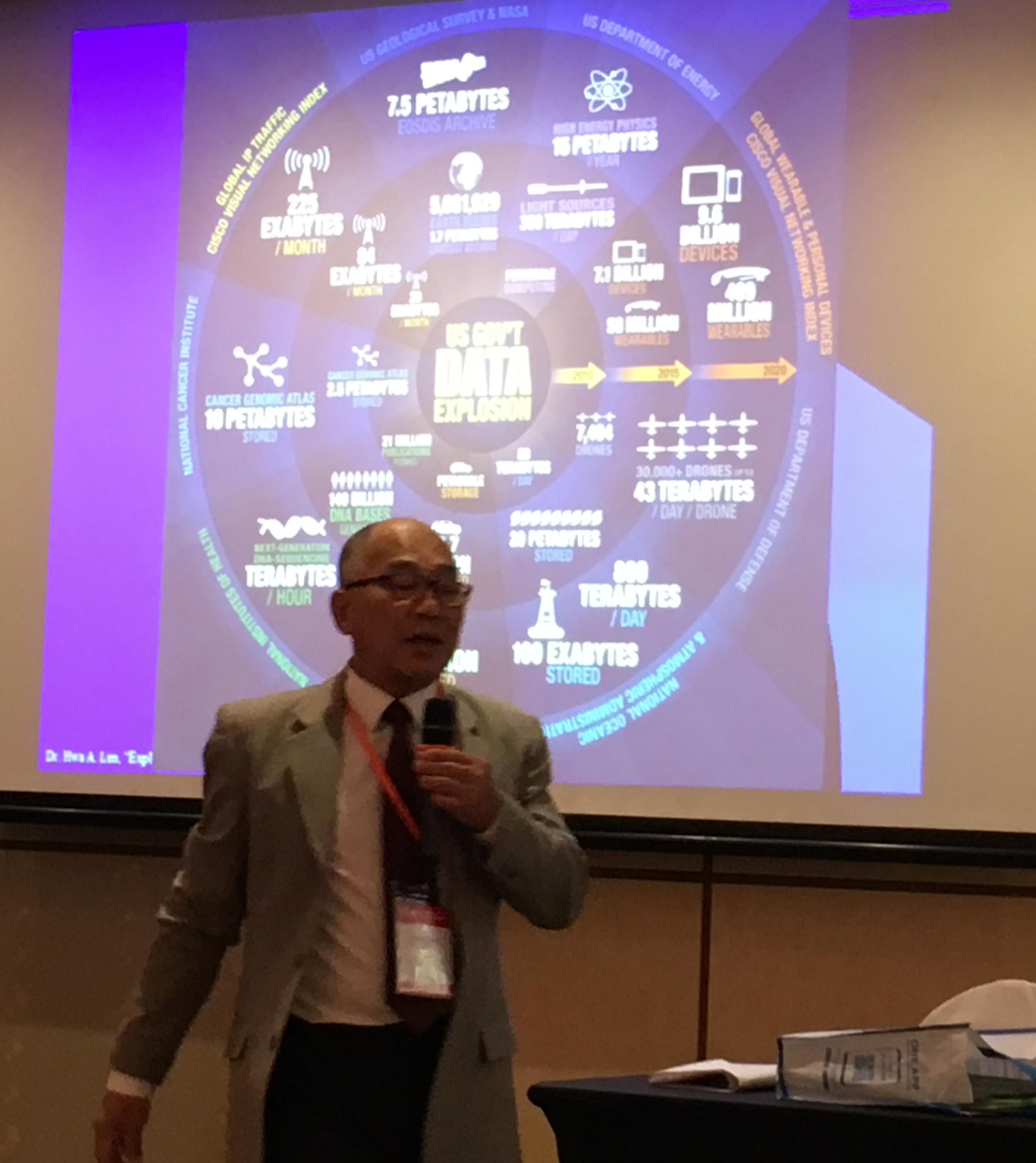 .
Caption: From biological observations
to organized information, data provides a foundation
for scientific investigation.
Dr. Hwa A. Lim, Chair and Keynote, "Exploring Biodata Behind Big, Open Data for WHealth", Joint Conference: The 9th Annual World Congress on Molecular and Cell Biology (ICMCB-2019) & the 3rd International Conference on Biotechnology, Holiday Inn, SINGAPORE, October 25-27, 2019.
Image credit: [Source / permission details]
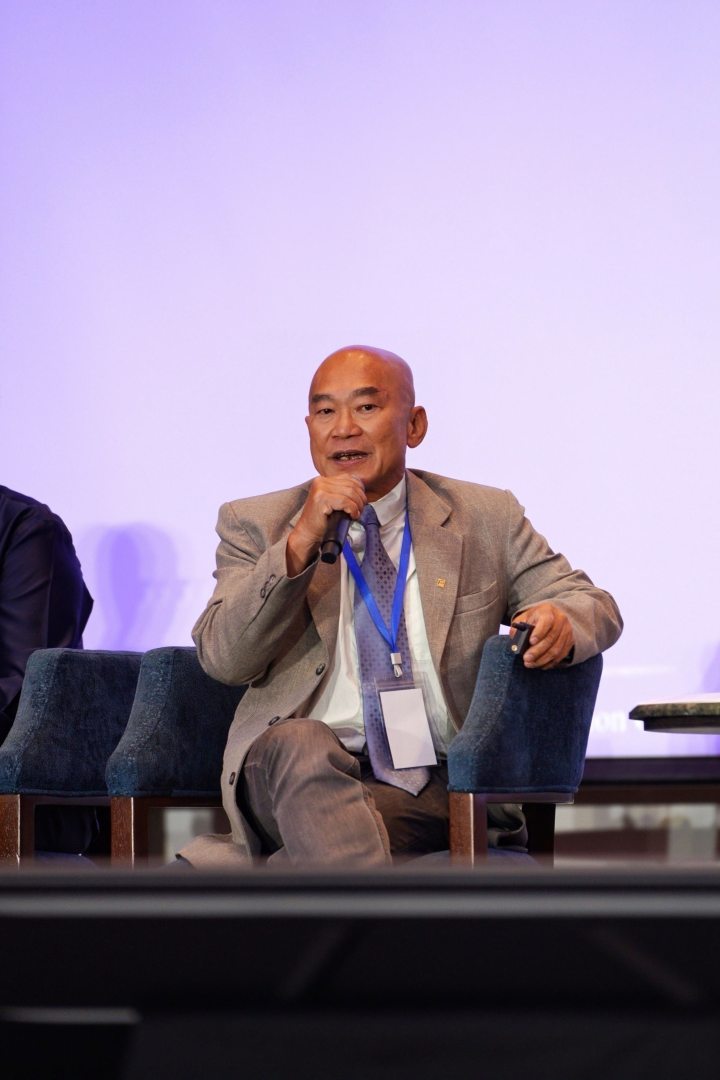 .
Caption: Bringing scientific ideas
and technological developments to a wider audience
through education and professional exchange.
Dr. Hwa A. Lim, Main Forum panelist, "AI: An enabler in biotech & healthcare", @ Advancing Biotechnology & Healthcare Collaboration towards a China-Malaysia Community with a Shared Future, Malaysia-China Economic Cooperation Outlook Forum 2026, Mandarin Oriental Hotel, Kuala Lumpur City Center (KLCC), May 21, 2026 Thursday.
Image credit: [Photographer / event / date]
Editorial note: Confirm image ownership, permission, identities, event details and captions before publication.
Technology does not develop in isolation. Progress in one discipline can create new questions, opportunities and applications in another.
D’Trends' published materials provide a starting point for exploring these connections, from biological data and information systems to wider developments in science and technology.
Explore the Company Profile ↗Visit the original resources for more detailed information and supporting material.
Direct answers help visitors understand the company and help search systems identify the main subjects covered by this page.
D’Trends, Inc. is a technology company with roots in Silicon Valley, California. Its published materials cover bioinformatics, biotechnology and information technology, alongside resources related to science and emerging technologies.
For company-specific details, consult the official company profile .
Data consists of observations and recorded information. Big data refers to datasets whose size, variety or complexity can require specialized approaches to processing and analysis. Artificial intelligence uses computational methods to perform tasks such as pattern recognition, prediction and content generation.
These concepts are connected, but they are not interchangeable. Useful AI applications depend on appropriate data, suitable methods and careful evaluation of results.
Bioinformatics applies computing and information analysis to biological data. It can help researchers organize biological information, identify patterns, compare datasets and develop questions for further scientific investigation.
Explore the D’Trends bioinformatics resources for additional reading.
Many scientific challenges involve collecting, organizing and interpreting complex information. Connecting scientific knowledge with computing can help researchers investigate patterns and understand relationships that would otherwise be difficult to analyze.
Start by identifying a specific problem and a meaningful outcome. Assess the available data, determine whether AI is suitable, evaluate accuracy and risk, protect sensitive information, and keep appropriate human oversight in place.
AI should be evaluated by its usefulness and reliability, not merely by its novelty.
Visit the official D’Trends website at www.dtrends.com and explore its company profile, bioinformatics resources, professional materials and multimedia pages.
Explore the resources, ideas and technology perspectives available through D’Trends. If you are considering a research, educational or business collaboration, contact the company to discuss your objectives and determine whether there is a suitable fit.